Where We Roll: Inside Silicon Valley's Kuleana Jiu-Jitsu
"Where We Roll" is a series that goes behind the scenes with the founders and owners building today’s Jiu-Jitsu academies, exploring the business, philosophy, and day-to-day craft of running a room and developing students.
For this installment, Kuleana Jiu-Jitsu co-founder and head instructor Justin “Machine” Holder shares how he and partner Darren Ogasawara built their academy in Sunnyvale, California from scratch, why they prioritize strong fundamentals, and how they’ve created a welcoming space for every student.
In the afternoon lull between midday classes and the evening rush, Kuleana Jiu-Jitsu has the unhurried steadiness of an academy built with care. Sunlight hits the wide stretch of mats and lights up a hand-painted mural linking the coastlines of Oahu and San Francisco, a nod to co-founder Darren Ogasawara’s years of living and working in Hawaii.
In Hawaiian, kuleana translates to responsibility, privilege, and stewardship. It means taking care of a place and its people, knowing they will do the same for you. That idea serves as the guiding principle for head instructor Justin “Machine” Holder, a former medical tech, and co-founder Darren Ogasawara, who comes from the culinary world.
Over the course of a conversation, Justin reflects on making the leap into full-time gym ownership in Silicon Valley, how their respective backgrounds shape the way they run the room, and why true progress begins with defense, restraint, and sound fundamentals.
On their origins
If I met you five years before you started Jiu-Jitsu, what were you doing on a typical Tuesday night?
My main hobby was strength training. That was my primary physical outlet for years before I began Jiu-Jitsu. Even if I wasn't doing it every Tuesday evening, it was still my main outlet throughout the week.
When did you start Jiu-Jitsu, how old were you then, and what got you into it?
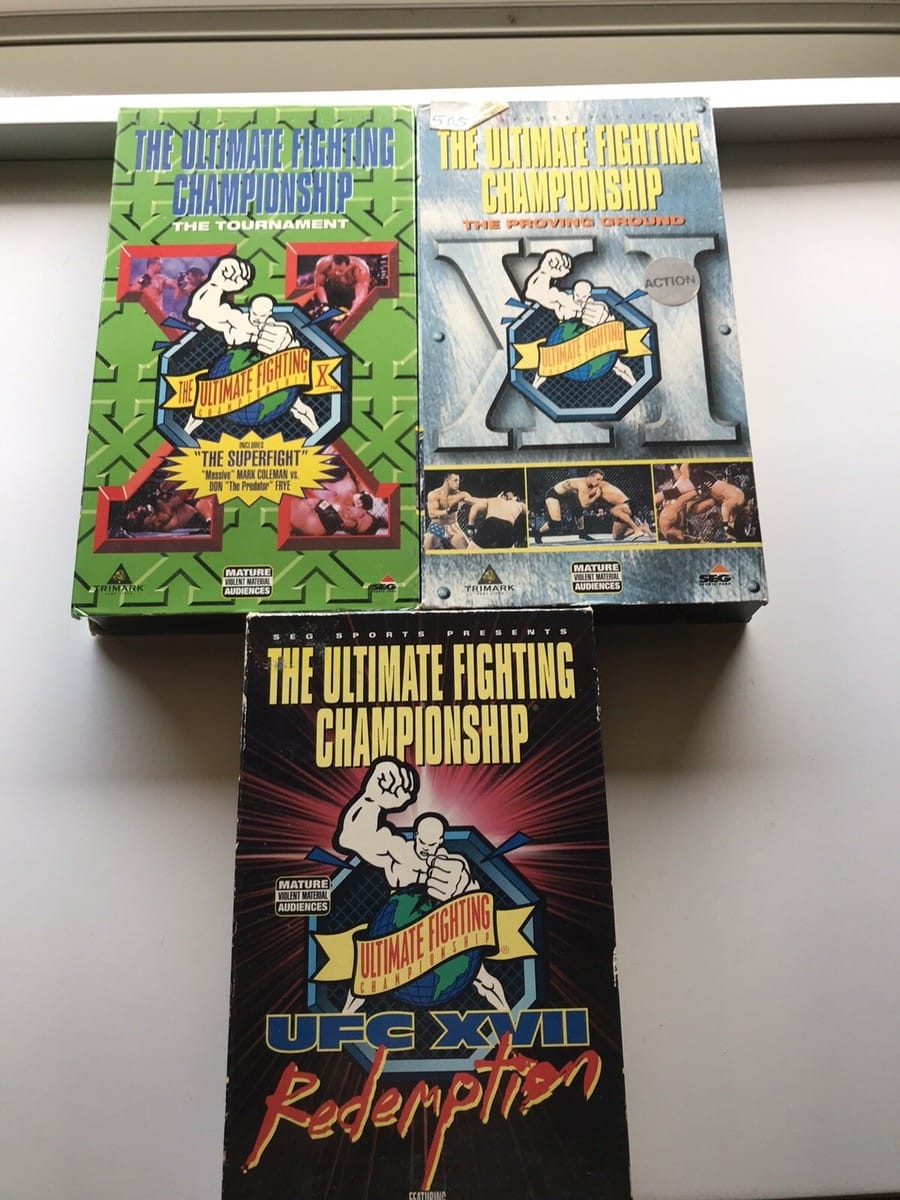
I was in my early twenties, around 23. I first saw the early UFCs in '96 or '97 on a six-hour pay-per-view compilation. My dad asked if we should order it, and I said sure.
I was fascinated by it. It included about 95% of the UFC fights up to that point, with a lot of Royce, Shamrock, and other Jiu-Jitsu guys. I watched the whole thing, and then I watched it again for another four or five hours.
Early UFC compilation VHS tapes.
Why Jiu-Jitsu over other disciplines?
I have a lifelong interest in martial arts, so I was fascinated by all of it, especially the Jiu-Jitsu guys. What they were doing looked completely foreign compared to everyone else.
First, they focused on grappling and staying in close contact, while everyone else was punching and kicking. Second, they were often on their back, whereas everyone else tried to stay on top. Even from their back, they defended themselves and attacked with submissions I had never seen before, like triangle chokes, armbars, and sweeps. Seeing them work off their back, take their opponent's back, and finish with a choke was fascinating. Just the different varieties and methods of submissions were fascinating.
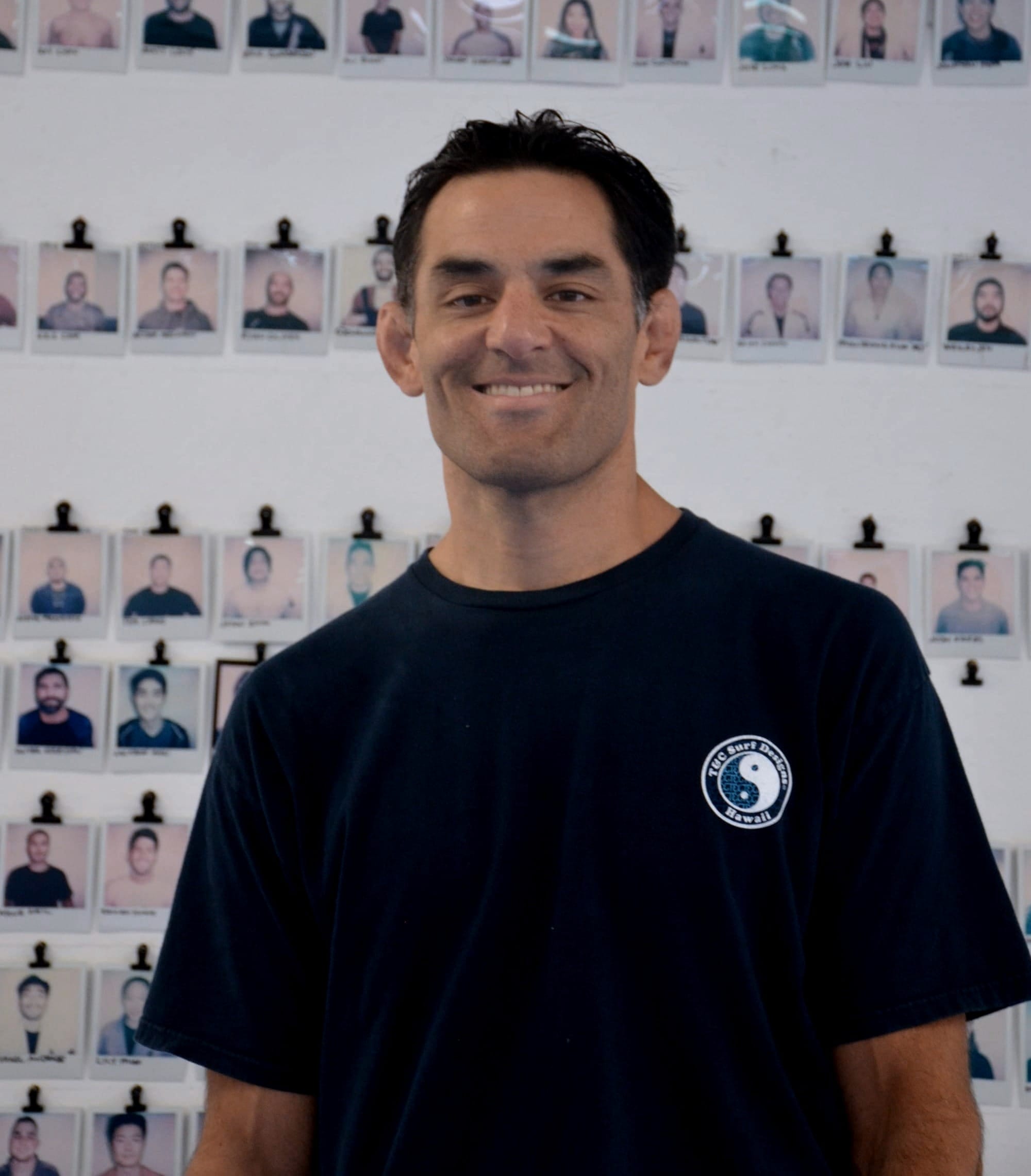
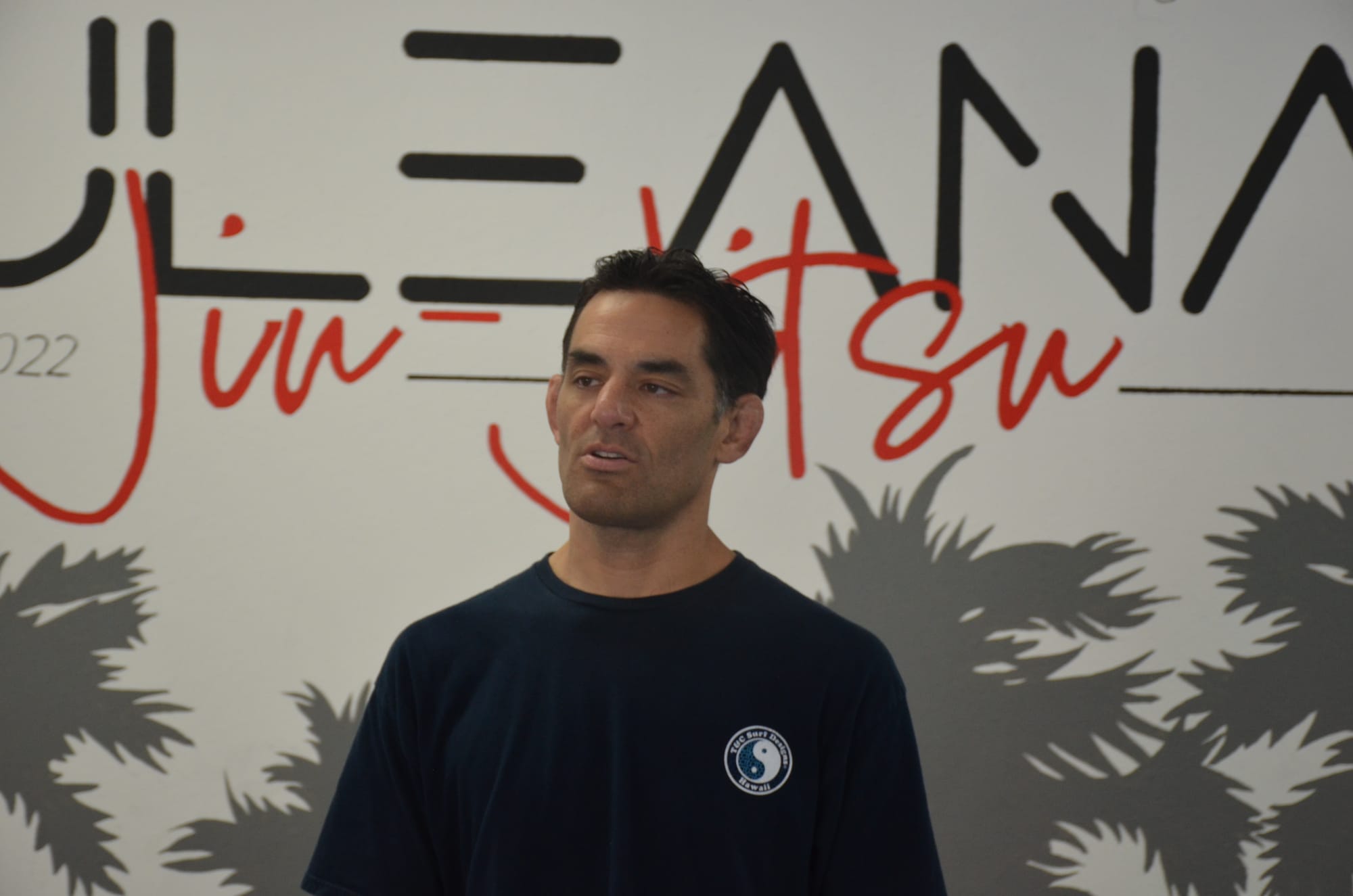
Kuleana Jiu-Jitsu co-founder and head instructor, Justin “Machine” Holder.
Do you remember your first time stepping into a gym, and what that felt like?
My first time in a Jiu-Jitsu gym was at my home academy, Ralph Gracie Mountain View. It felt a little scary starting something new, seeing more experienced people, and wondering how I would fit in. I didn't know what it would feel like to have someone on top of me and being overwhelmed.
Many times, I rolled with someone smaller who controlled me in ways I had no answer for. I remember going with another white belt who caught me in a loop choke. I wasn't familiar with the move, and the pressure came on very fast. I resisted tapping and almost went unconscious. He was one of the smallest people in the academy.
On taking the leap & their partnership
How did you and Kuleana’s co-founder, Darren, first meet? Was there a specific moment when your styles clicked?
When Darren first started training in 2016, he was a brand-new white belt, and I was a black belt acting as an assistant under a head instructor. I noticed right away that he picked things up faster than average. A little over two years later, that head coach left, and I stepped into the lead role. Darren stuck around and kept training, and he ended up being the very first adult blue belt I ever promoted.
Back then, opening my own gym wasn't even on my radar. Just reaching the level of head coach felt like a huge accomplishment, so becoming a business owner was completely unplanned. Eventually, Ralph Gracie Mountain View closed, and Ralph Gracie San Jose and Santa Clara opened in its place. By purple belt, Darren had stepped into a co-head instructor role. That accelerated his growth, because teaching forces you to understand positions on a deeper level.
Eventually, Darren came to me and asked, "Would you ever want to open an academy together?" I was on the fence at first because I had only ever been a coach, and running a business was completely foreign to me. After thinking it over, though, I realized it was something I truly wanted to do.
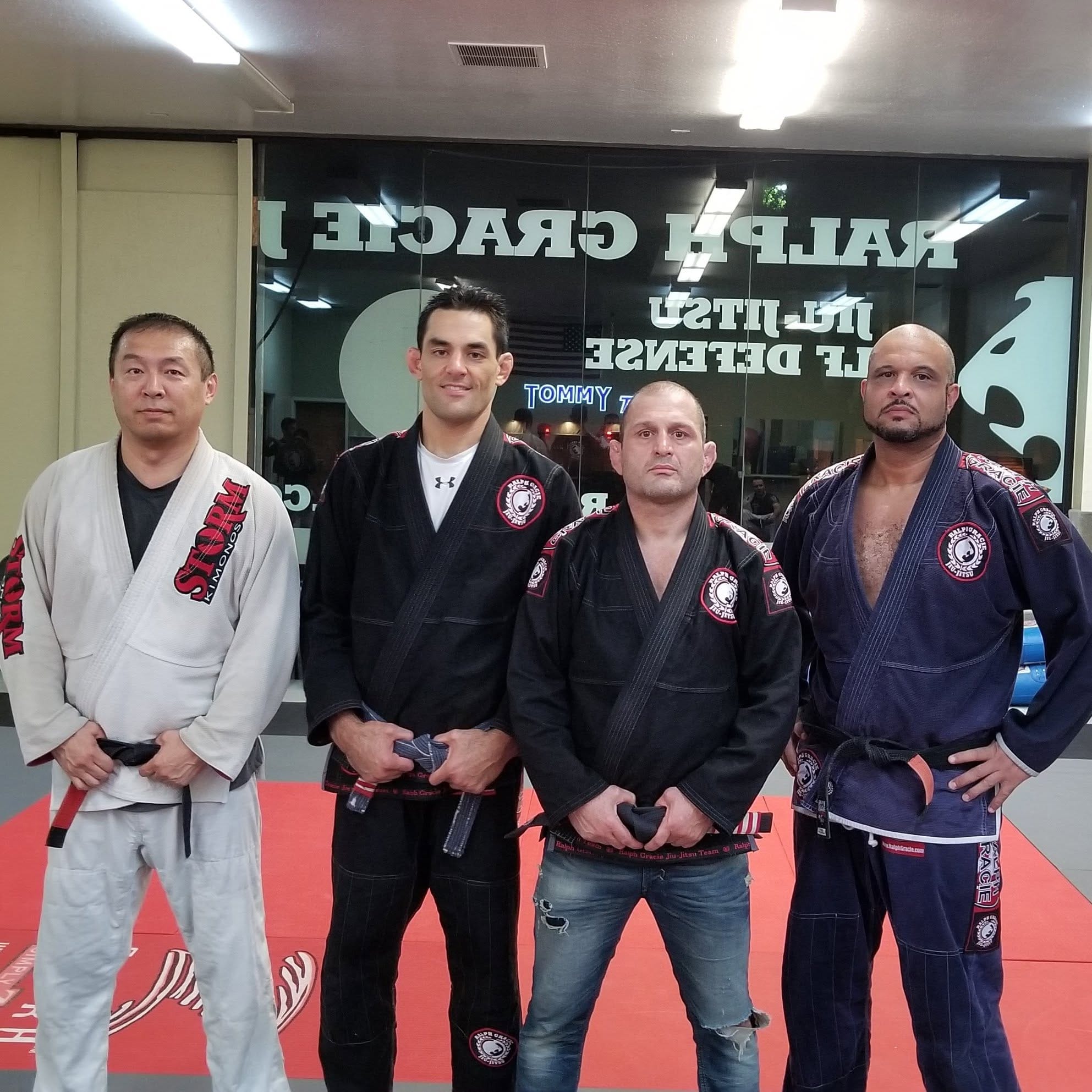
Justin “Machine” Holder with Ralph Gracie at Ralph Gracie Mountain View, 2017.
Was there a moment over a meal or a long training session when you realized what Kuleana had to be and what you wanted to do differently?
We talked about it casually at first, and then got into the details over lunch at an izakaya. At the time, Darren was managing the chefs for the Google offices. We discussed what we wanted to do differently from our previous gyms. Beyond having more control over the curriculum and daily operations, we noticed our old gym rolled out a lot of new initiatives that were hard to sustain. We wanted to avoid that and run a smoother, easier-to-manage operation.
Curriculum-wise, we slowed things down to spend a little more time on each position, with less emphasis on just submissions. Our previous instructor favored a very offensive, submission-heavy style, which has its benefits. Here, we teach slightly more guard work. The main focus is on fundamentals, building well-rounded students, and keeping our energy on the academy and the curriculum itself.
When you took this leap of faith to open Kuleana, what was the most terrifying or uncertain thing about opening an academy in a market as competitive as the Bay Area?
Yes! The biggest fear is pouring so much time, energy, and money into one thing when nothing is guaranteed. All of it could disappear if the business doesn't bring in enough money to survive. Investing a large sum and worrying if you can build the membership needed to stay afloat is a scary thought.
When we moved here from our smaller, cheaper spot, which was basically an auto garage with a roll-up door, our expenses jumped. We knew revenue would be a challenge, and we needed a lot more students just to cover our costs.
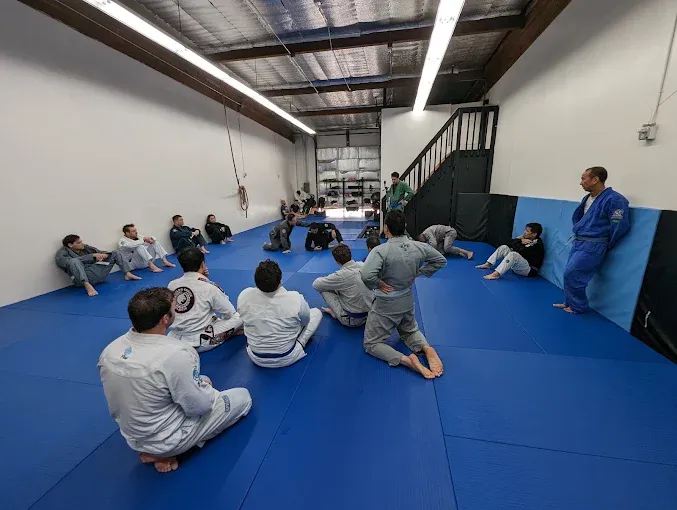
Kuleana's first location. A much smaller space that nonetheless carried the same welcoming atmosphere.Inside Kuleana’s current home. A significantly larger training space complemented by changing rooms, a dedicated weight section, and a separate Muay Thai alcove.
On building the space & operations
What part of this physical space has your literal blood or sweat in it?
The size of the mat, probably. I had no idea it was going to be this big! Putting it together is a lot of work, like a giant puzzle. We also painted almost every wall surface in the space.
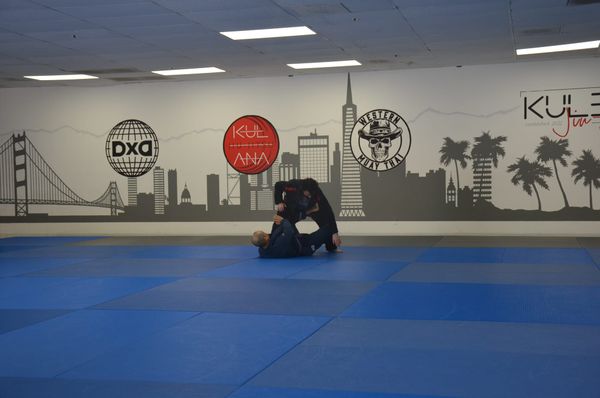
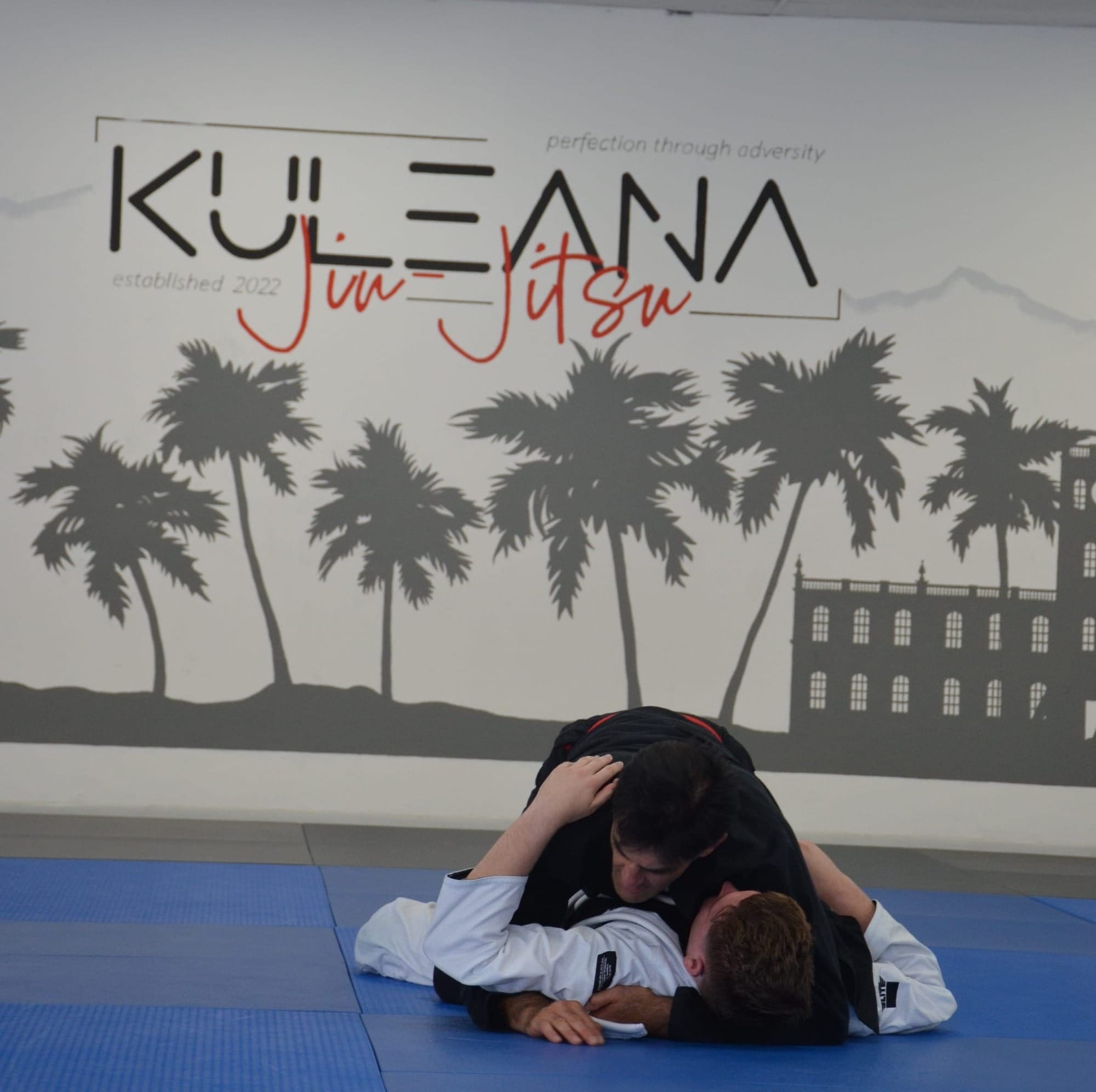
For the mural, Darren hooked a projector up to his laptop and cast the design onto the wall. We turned off the lights and traced it first, then filled it in. It took a bunch of people a long time to finish. Darren showed us how to paint the palm tree leaves, and we copied his technique. The right side shows Hawaii, with buildings that actually exist on Oahu, and the left side is San Francisco.
Painted collaboratively by staff and students, the mural bridges Hawaii and San Francisco, honoring the roots of Kuleana and its founders.
You come from healthcare and Darren from the culinary world. How do those backgrounds help in running the business?
Darren’s background running his own restaurants and working as the assistant manager at our previous academy gave us valuable business experience.
For me, I worked as an EMT for a short time and then as a medical tech. Knowing general first aid always helps, but my kinesiology degree is probably the biggest asset. Understanding sports nutrition, injury management, strength training, mobility, and hydration goes a long way in a physical sport like Jiu-Jitsu.
In your day-to-day operations running Kuleana, how do you and Darren divide the work?
Darren handles most of the operations and computer work, with help from our assistant, James.
I take care of the physical side of the academy, including general upkeep, cleaning, picking up supplies, and traveling to tournaments to coach. If an elementary school invites us on a Saturday to introduce Jiu-Jitsu and self-defense to kids, I'm usually the one who goes.
If you could go back to day one and give yourself one piece of advice about running a Jiu-Jitsu business in Sunnyvale, CA, what would it be?
Understanding that it can take a long time to grow a membership base to a successful level, moving from a loss to breaking even, and eventually turning a profit.
Also, realizing how much we rely on promoting the business and putting ourselves out there. Marketing wasn't something I factored in enough at first. Today, a good amount of students find us through Google search and Maps reviews, and the other main driver is social media.
On coaching philosophy & culture
What did you learn from transitioning from a student to an instructor that you didn't expect?
You learn things in much more depth because you have to take information, process it, and put it into a format that is easy for students to understand. Early on, you mostly copy what you were taught and repeat it the same way, or you teach moves that come easily to you.
When I became a head instructor, I made more of an effort to ensure students weren't missing any essential skills. Before that, I didn't feel the same pressure to make sure everyone had sound fundamentals. Once I took the lead, building that foundation became my primary job, and teaching advanced moves became secondary.
Your students are kind of like employees. If you want good employees, you have to make sure they know how to do their job well without huge gaps in their knowledge. If I taught well, it would produce students with strong fundamentals, and from there, I could grow them into more advanced techniques.
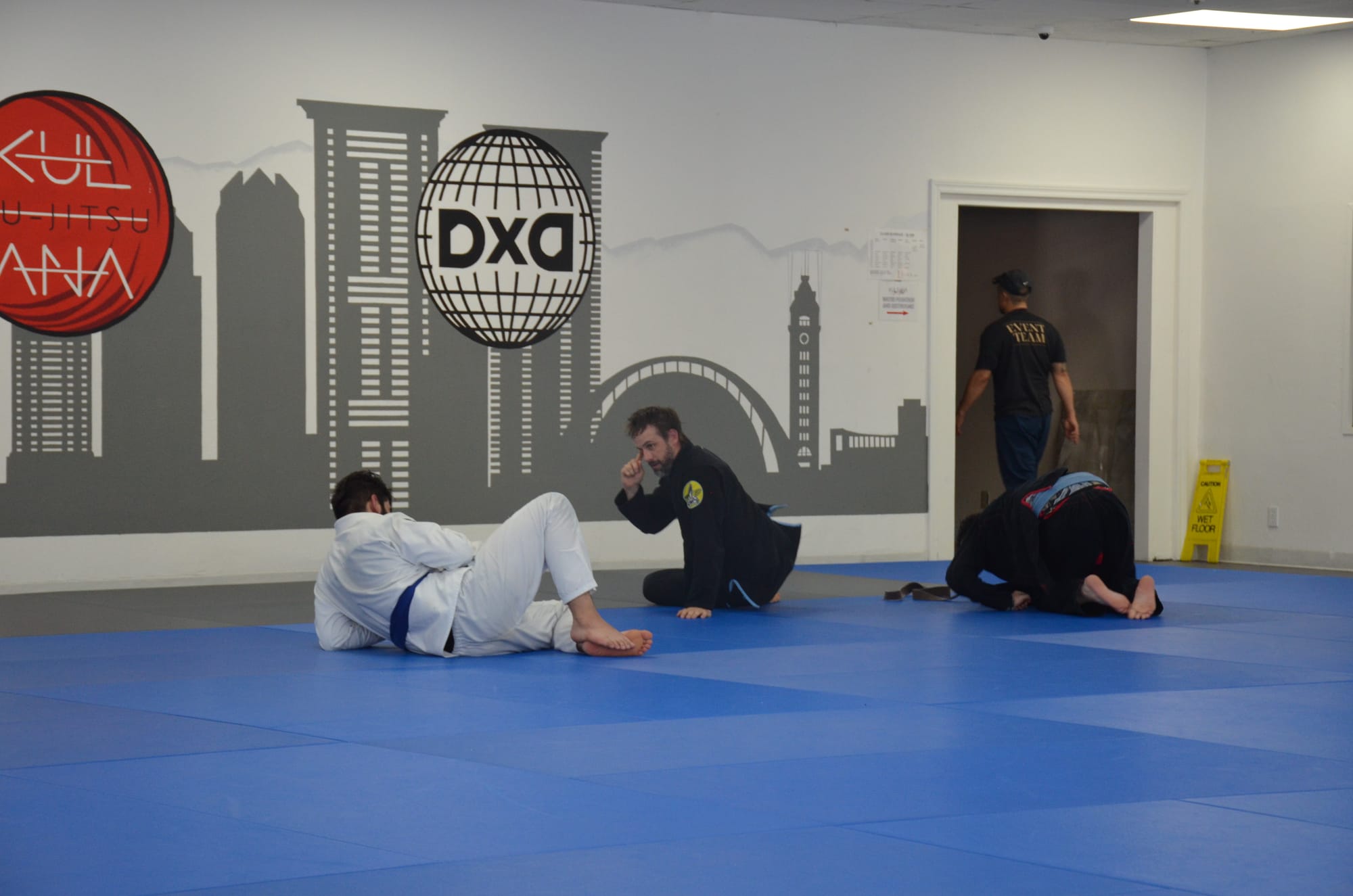
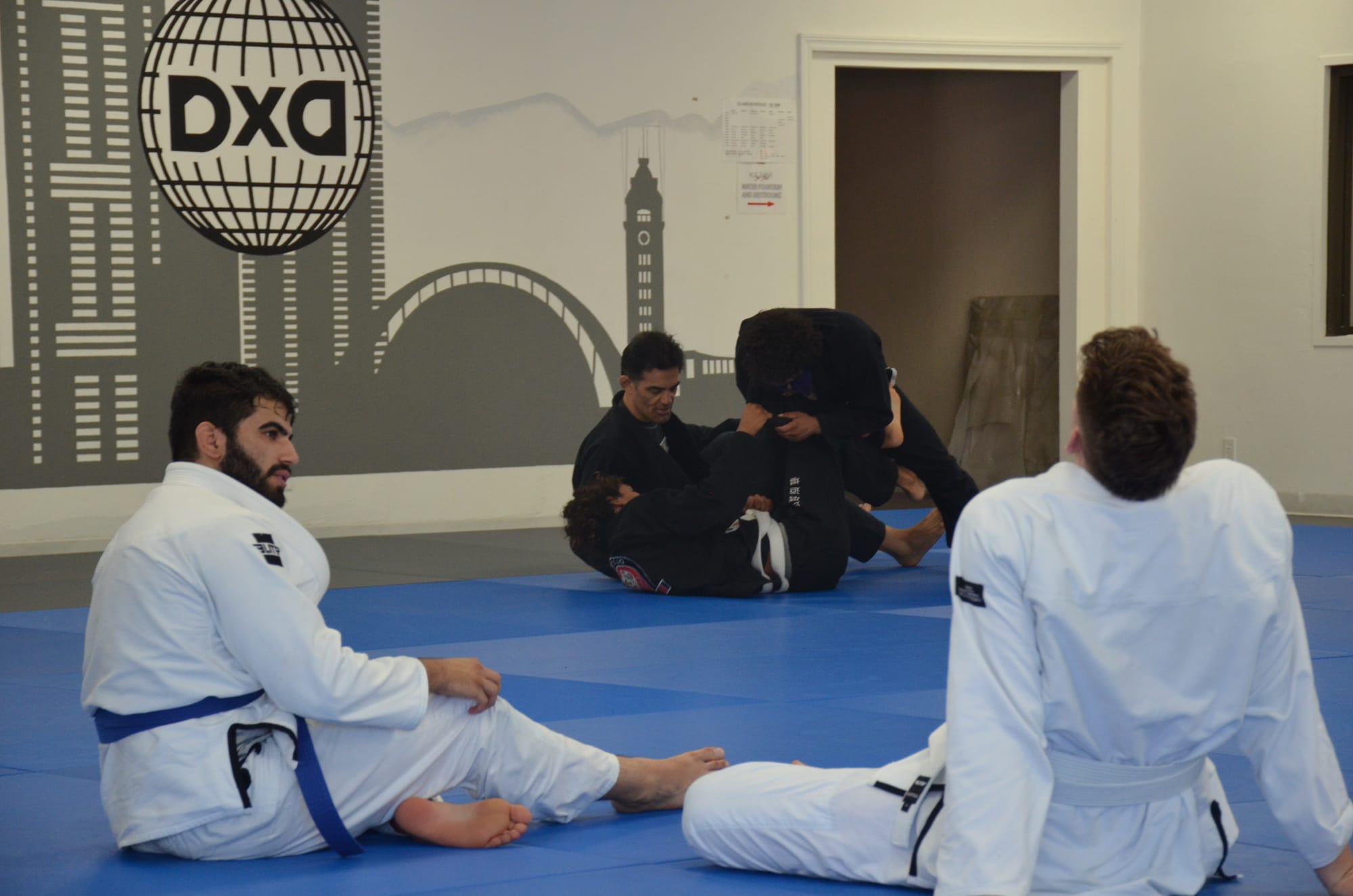
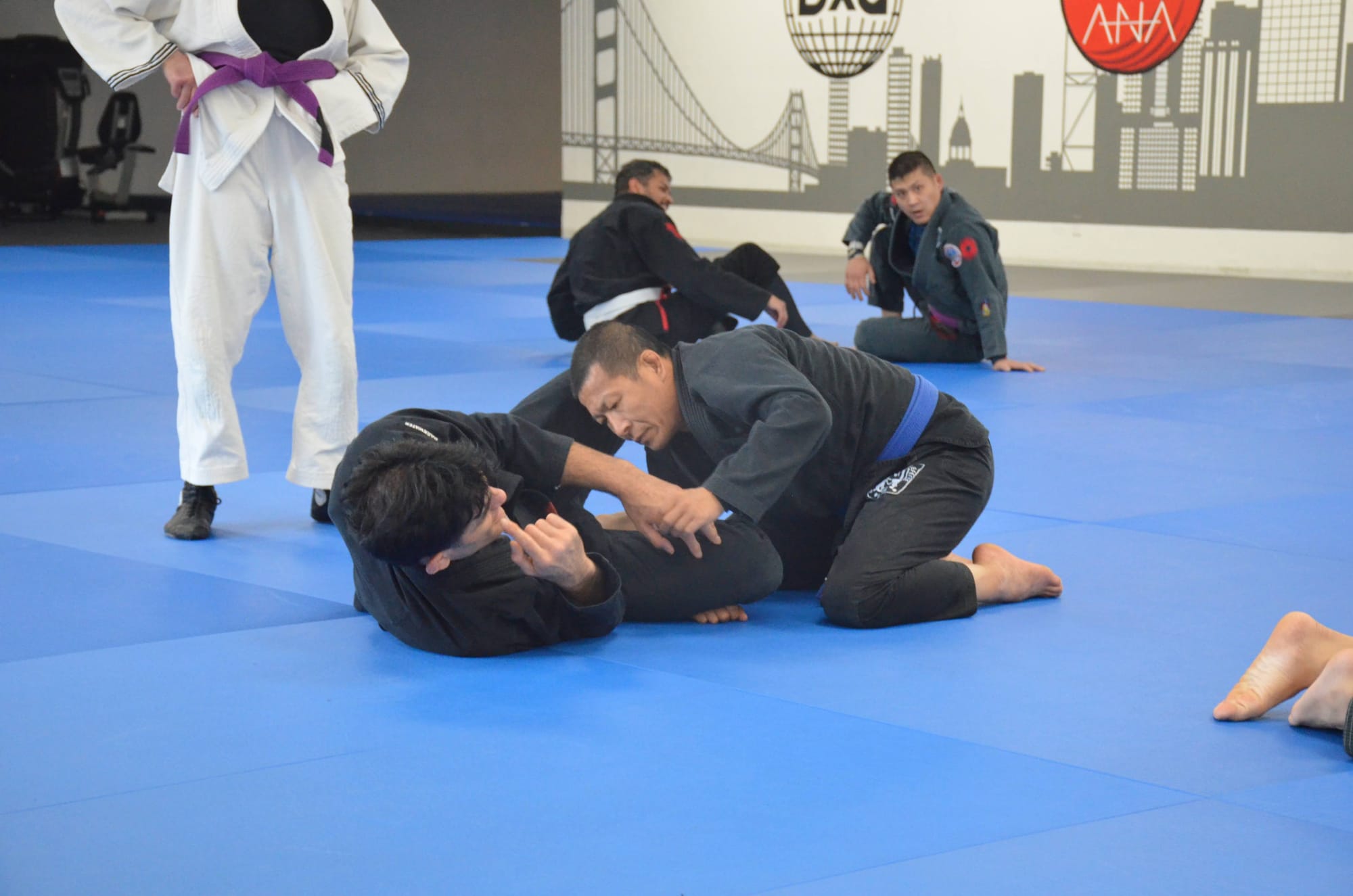
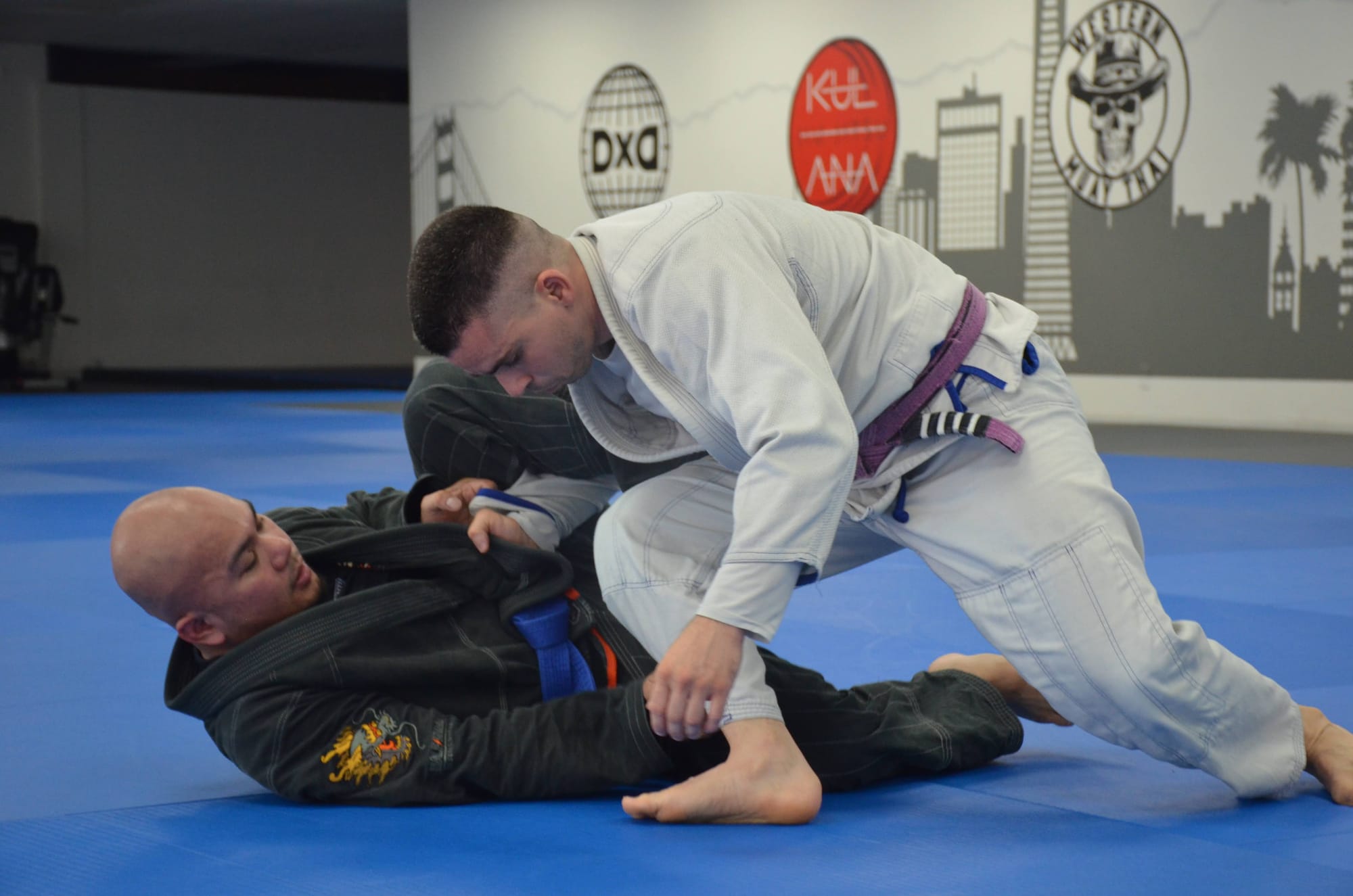
Justin demonstrating a position during class, emphasizing clean fundamentals and detail.Students drill and test the position under live resistance during positional sparring.
How would you want a Kuleana student's Jiu-Jitsu style to be described by someone from another gym?
As a head instructor, you want everyone to develop their own style, but they first need strong fundamentals and a solid base of knowledge.
Our curriculum spends a lot of time on defense, escaping, and staying safe under pressure. Ultimately, we want to build fundamentally sound, defensively minded students who feel free to be creative while training safely, staying in control both physically and mentally.
What’s your view on leg locks and keeping up with modern trends versus sticking to core fundamentals?
Fundamentals are very important, but we also do our best to keep up with modern positions and training styles, like leg locks, different sport positions, and newer guards. Darren covers that a bit more than I do, especially with his Tuesday leg lock class.
Coming up, our instructors avoided teaching leg locks early on so students wouldn't rely on them instead of developing the rest of their game. As a coach, you eventually ask yourself if it's okay to let go of that old mindset, give students more information early, and shape them into well-rounded grapplers afterward. Plus, a lot of competitors are learning these skills sooner now, and we don't want our students to fall behind the times.
What sets Kuleana apart when it comes to culture?
We definitely didn't have open mats back then, so being more open to the community is a big change. Having an all-women's program is also something I had never been part of before.
I never really thought about it until we considered offering it here. I always figured that if women wanted to train, they would just show up, and we would do our best to make the environment welcoming and not off-putting. What we found, though, is that having their own space is much better, especially for women with no prior experience.
Is there an unwritten rule at Kuleana that everyone knows, even if it’s not on a poster?
Our students are very good at controlling their intensity and aggression in a way you might not see at other gyms. We emphasize safety alongside hard, focused training.
We also pair people up based on size, intensity, or experience, and we lean on our more experienced students to help newcomers. People sometimes say other gyms can get cliquey, with small groups training exclusively together like a little academy inside the academy. Here, pretty much everyone trains with everyone.
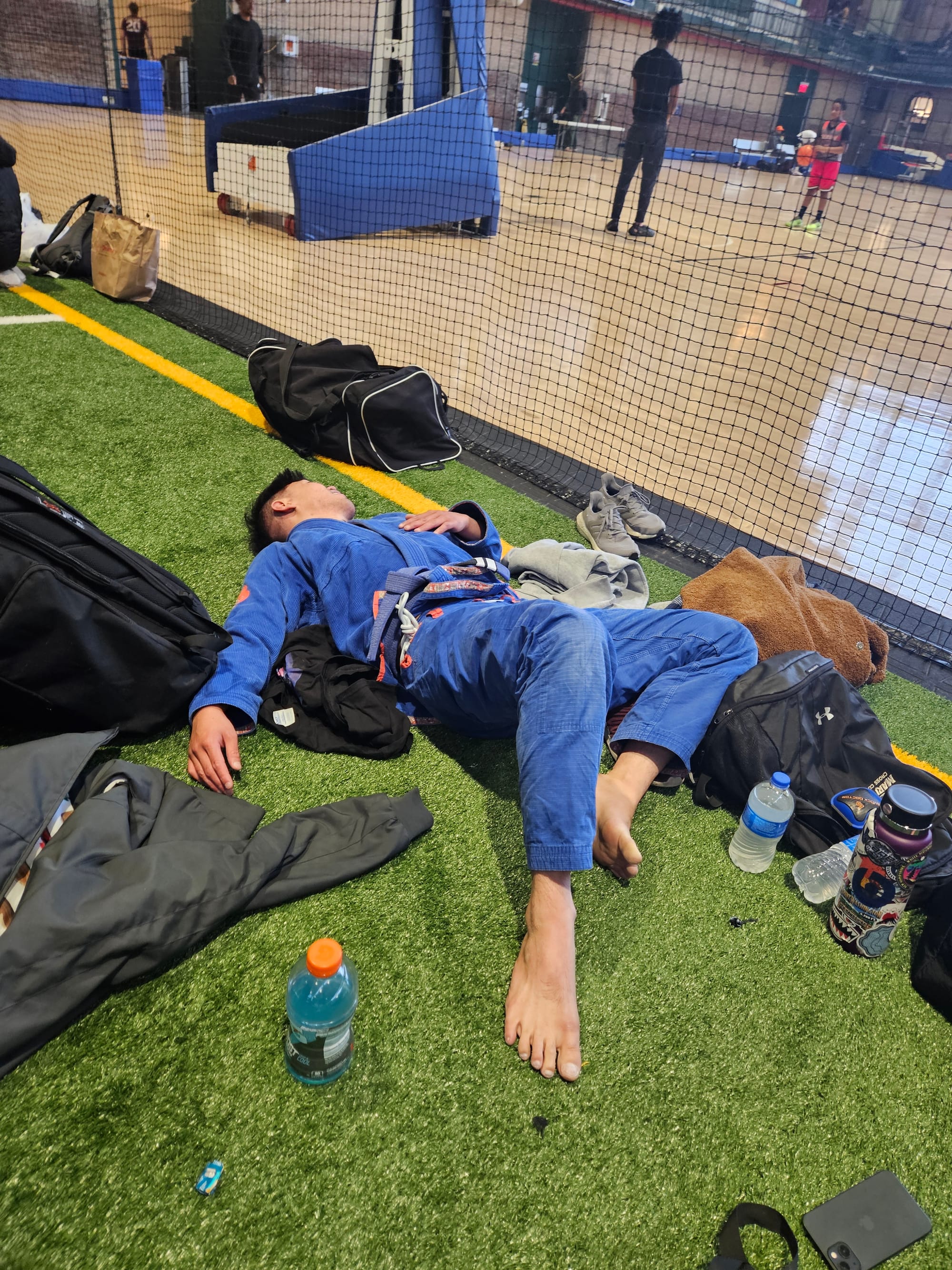
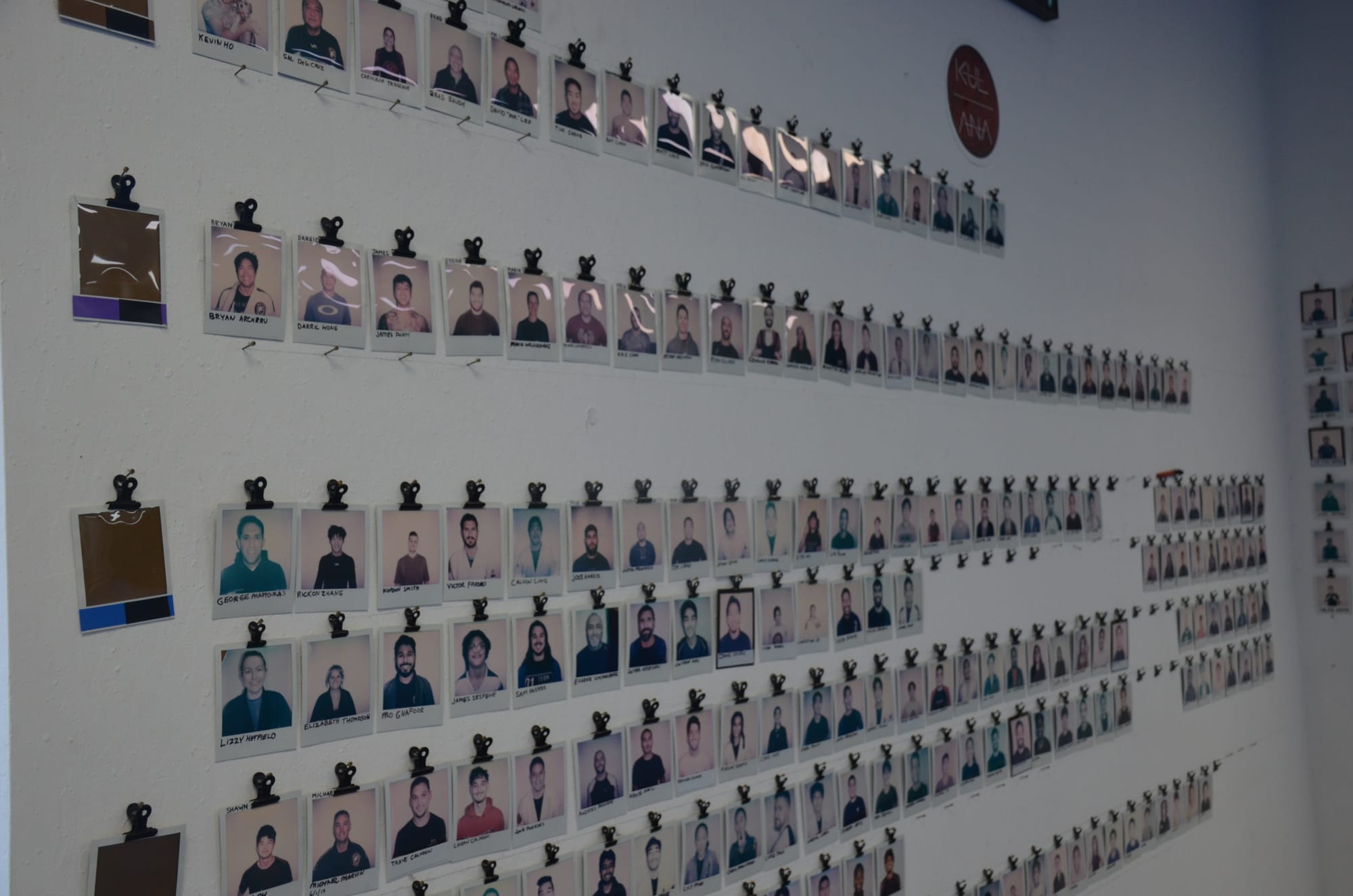
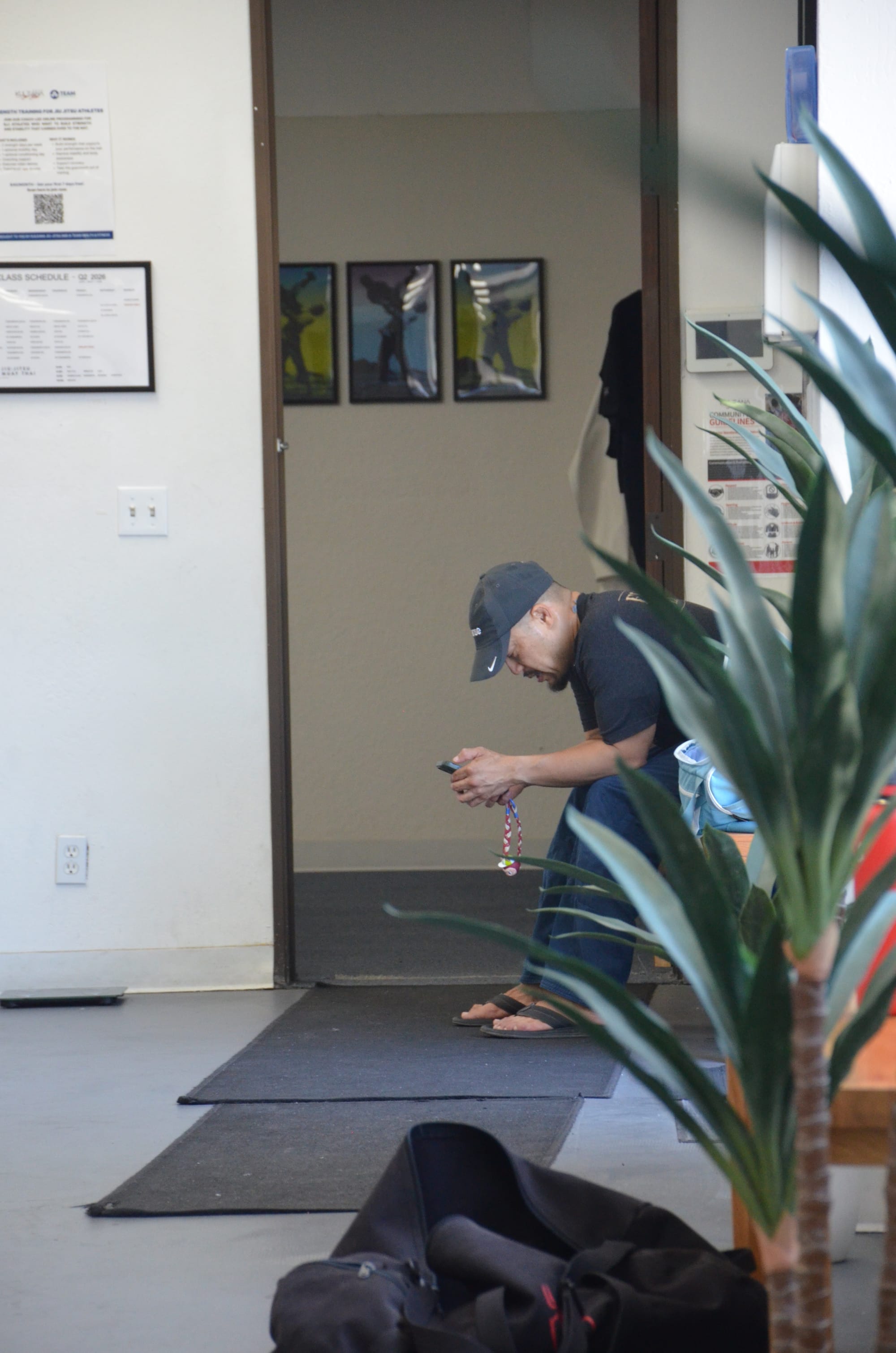
Every new member gets a Polaroid on day one. A thoughtful touch so nobody ever has to wonder what their training partner’s name is.Post-session relaxation. A student unwinds on the side after the afternoon rounds wrap up.
What is your favorite time of the day at the gym?
I always liked training during the lunch class the most. I'm freshest then, which lets me focus on teaching at night.
I also appreciate the downtime between the lunch and evening sessions. It's a calm window to rest my mind and body and refocus. The kids' classes are fun too, especially seeing them learn when they're locked in. Then, the evening class brings a completely different vibe because you have to match the energy of a full mat. By the time it wraps up, though, I'm definitely a little drained.
How do you keep learning and developing new material for yourself when you're the head instructor?
In class, I am mostly relearning and reviewing things. But as far as learning new stuff, in the past it's always been learning on my own, or to some degree learning from students or upper belts who research techniques independently and bring new positions to the mat. I don't have an instructor of my own to learn from directly, but watching Darren's classes gives me fresh ideas because he studies so much and is so technical.
There’s a quote from Jean Jacques Machado I heard years ago on a podcast that always stuck with me: "Sometimes you have to learn twenty techniques to realize you only need five." You learn very broadly and expansively, and then you bring it back and sharpen what you need.
Field Notes: Kuleana Jiu-Jitsu
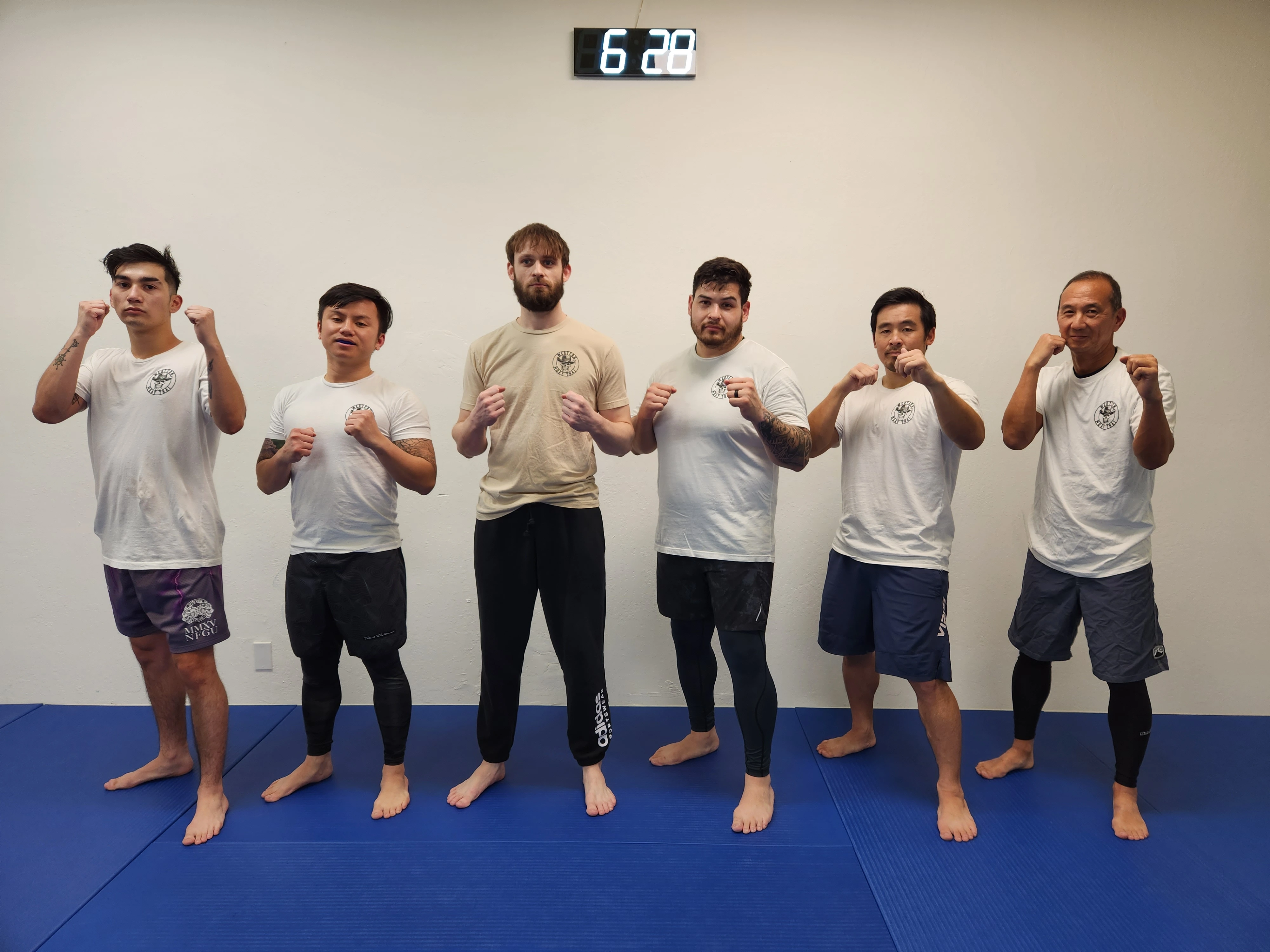
Co-Founders: Justin “Machine” Holder & Darren Ogasawara Curriculum highlights: Defense-first fundamentals, modern leg-lock literacy, and an all-women’s program. They also offer judo and wrestling classes, as well as a Muay Thai program offered by Western Muay Thai. The unwritten rule: Cross-rank inclusivity, zero cliques On the wall: A hand-projected, community-painted mural uniting Oahu and San Francisco Location: 1133 Sonora Ct, Sunnyvale, CA 94086 Phone: (408) 409-5313
Calvin fell into jiu-jitsu on a total whim and never left. Between his work and Dad duties, he hits the mats to trade daily stress for a good sweat, firmly believing that life is better when you’re slightly sore and in pain.