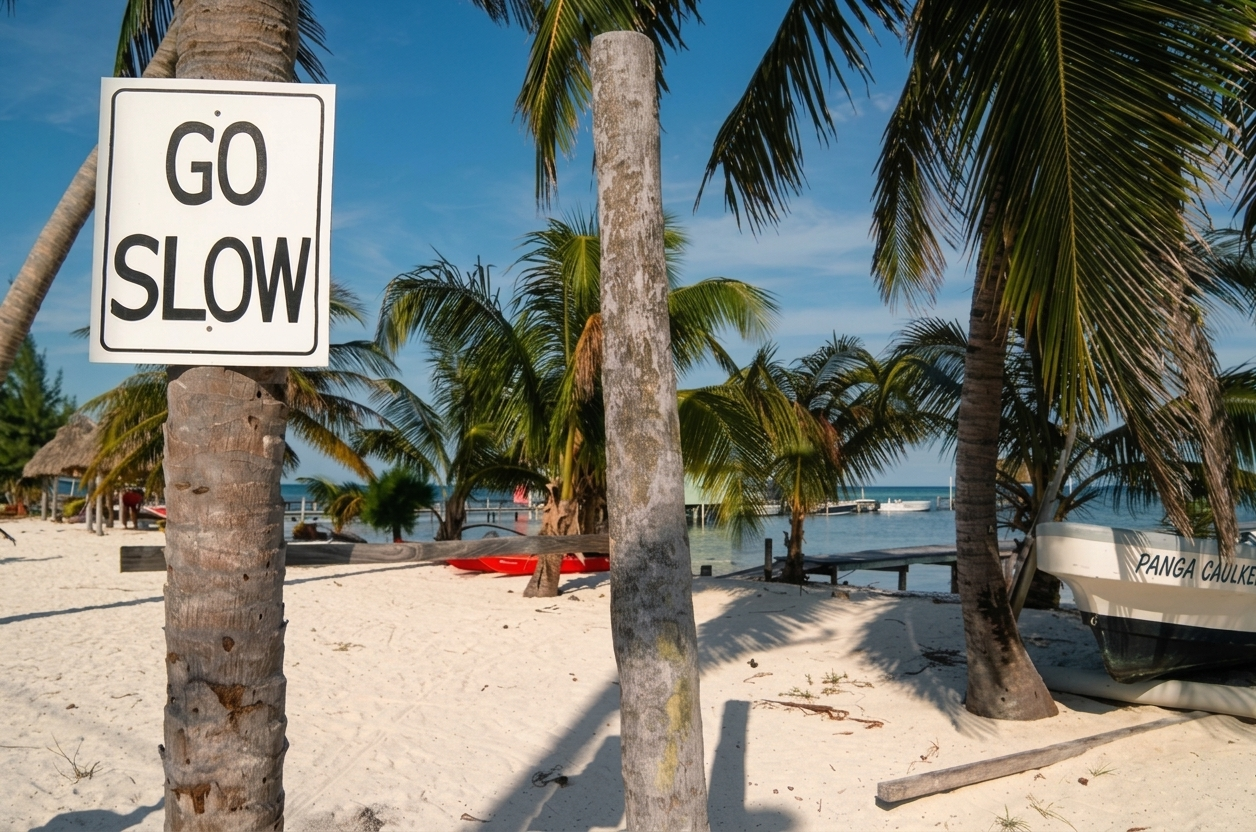
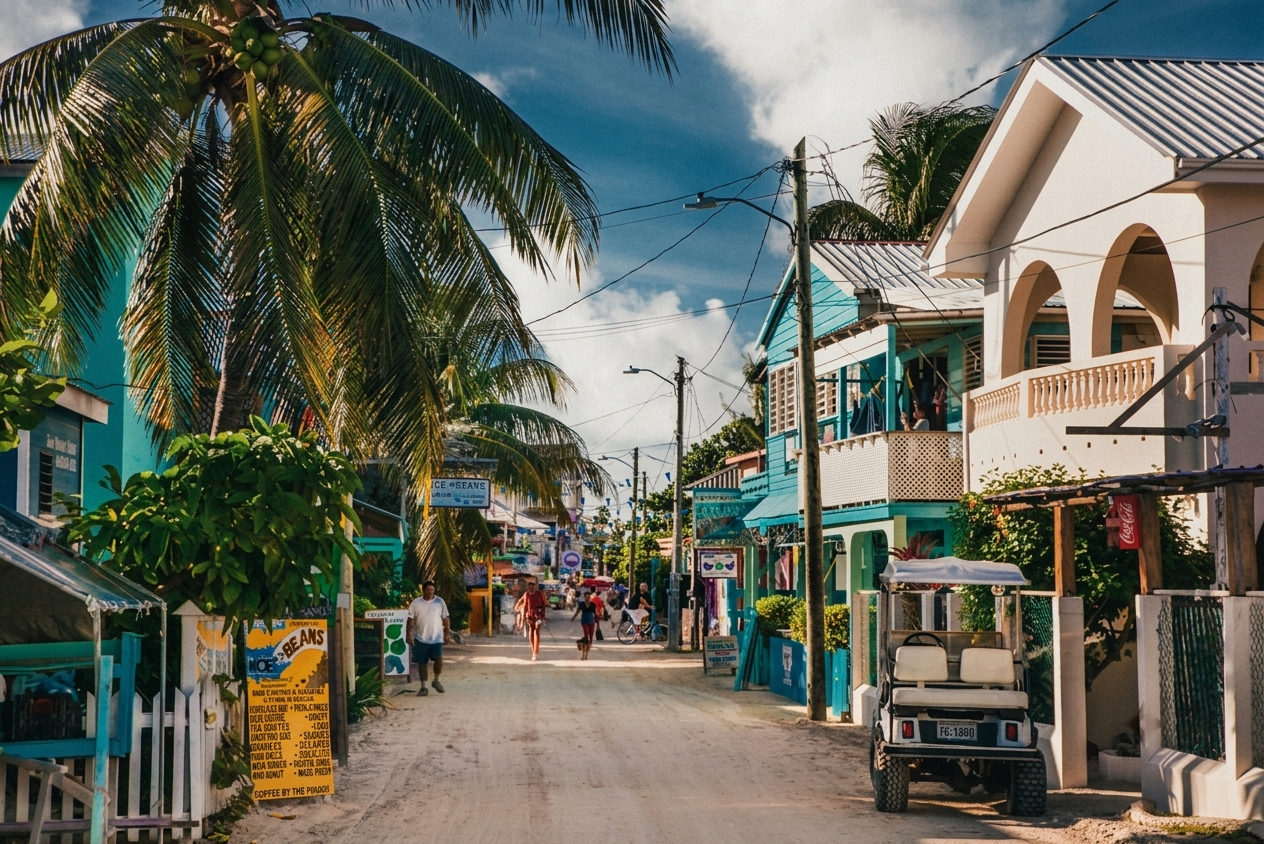
The first thing you notice on Caye Caulker is the silence of the wheels. There are no “traditional” cars here, only the low hum of golf carts and the soft crunch of bicycle tires on crushed coral. The island’s motto, "Go Slow," isn't a suggestion; it’s a physical law enforced by the heat and the horizon.
But inside a modest bedroom in the early weeks of 2023, the air was anything but still.
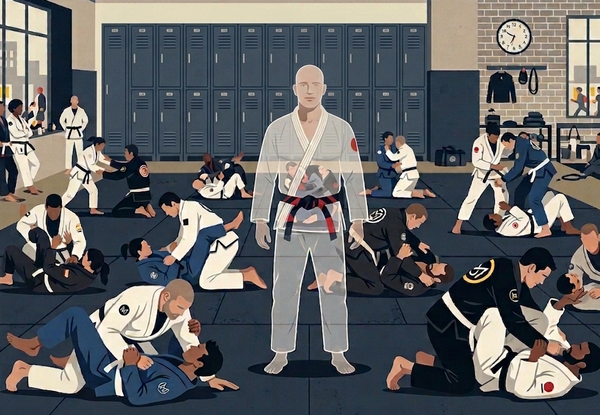
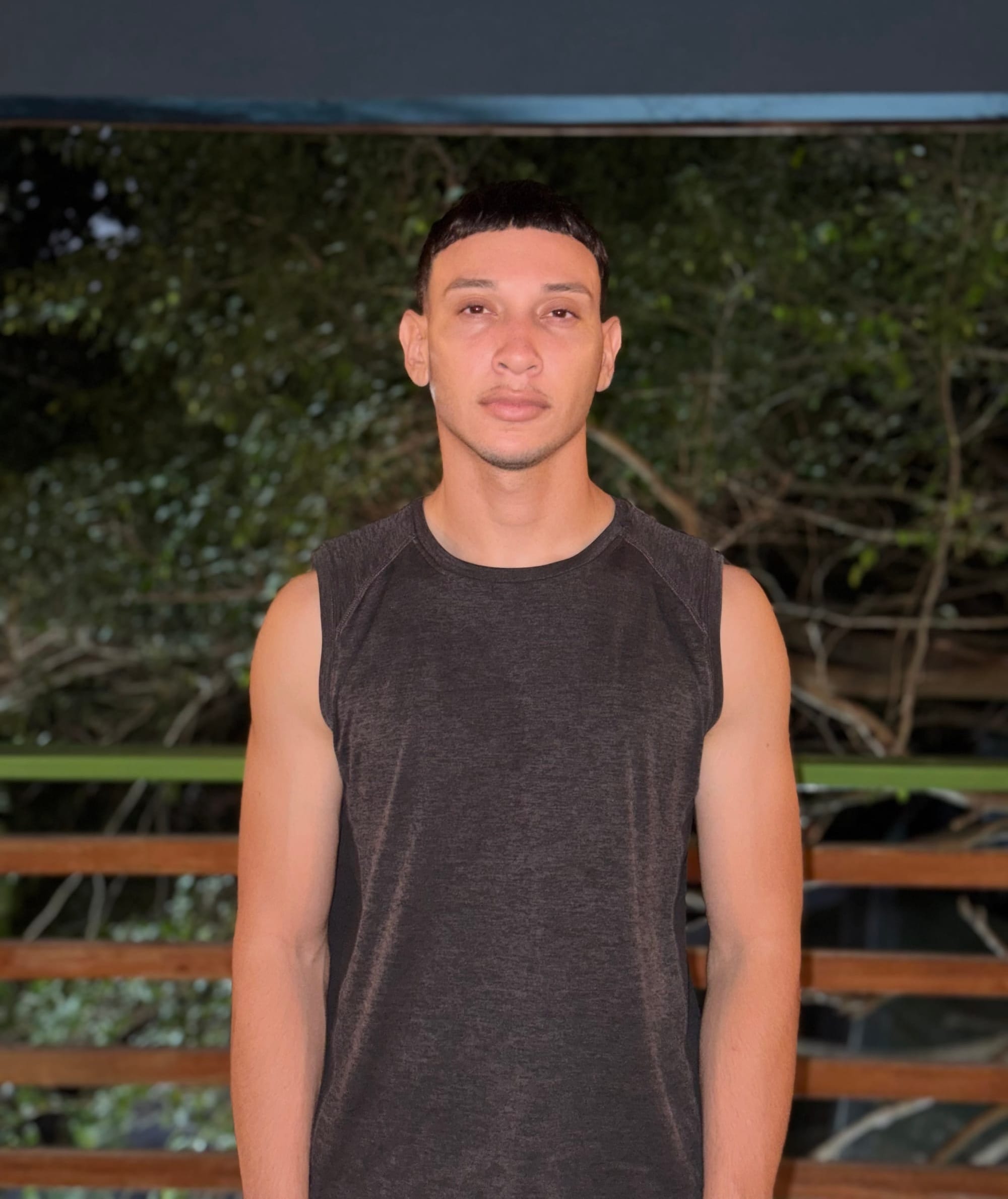
Mikhail Rosado, then 20, stood on a makeshift patchwork of yoga mats and primary-colored foam squares, the kind you’d find in a toddler’s playroom. Beneath this thin layer, however, lay cold, unforgiving tiles. It was the furthest thing from a professional training center, yet for Rosado and his older brother, Ilya, it was a sanctuary. Up to that point, their only exposure had been watching old clips of Royce Gracie’s early UFC dominance. They had reached the limit of what observation could offer, and so they waited in the quiet of that bedroom for the arrival of Joshua Blanco, a man they had just met and who would become their new coach, finally stepping through the door to translate the language of Jiu-Jitsu for them.
"We laid out yoga mats and kids' puzzle mats and Joshua taught us the fundamentals," Rosado recalls, looking back at those sessions with a mix of affection and wincing. "We couldn’t roll or do any resistance training since the yoga mats didn’t offer much protection from the tiled floors. We trained like this for about two to three weeks until we decided to move to the downstairs of my brother’s house where a wooden platform was."
The Reef and the Island
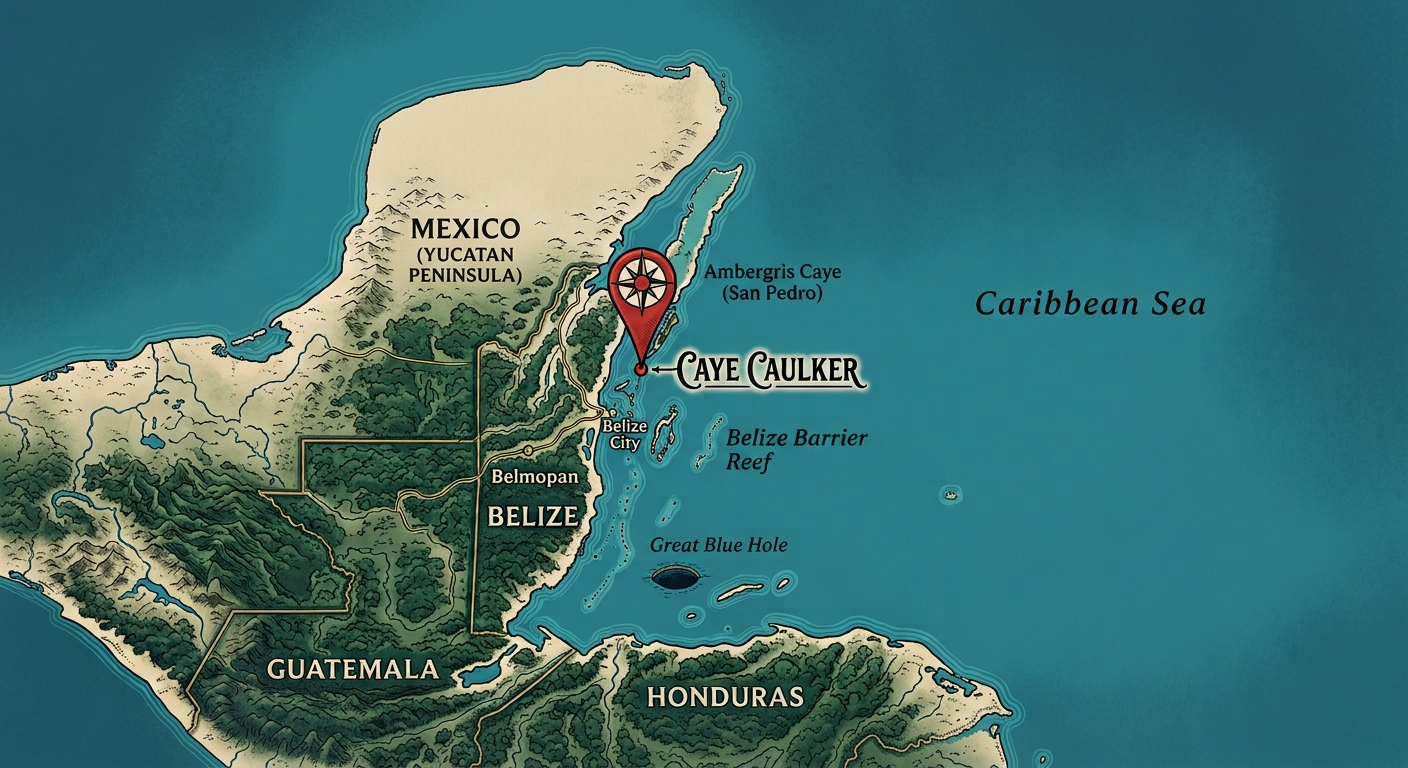
To understand Caye Caulker, one must first understand its place within the wider tapestry of Belize. Belize is a country defined by its "between-ness." It is the only Central American nation where English is the official tongue, yet its soul is a rhythmic blend of Kriol, Garifuna, and Mestizo cultures. While the Belizean mainland is a landscape of dense jungles and ancient Maya mountains, Caye Caulker represents the country’s "island time" identity.
The island is a limestone coral splinter situated roughly 20 miles off the coast of Belize City, protected from the open ocean by the Belize Barrier Reef, a 190-mile-long living wall that is the second-largest in the world. This massive reef system creates a calm, shallow lagoon that dictates the very pace of life.
Bringing a combat sport like Jiu-Jitsu to Caye Caulker creates a beautiful paradox. While the "gentle art" demands intense focus, the island itself exists to shed it. Here, the "Go Slow" motto is more than a slogan, it is a communal exhale. It is a legacy of the Hicaqueños, who have long favored living in the moment over the frantic rush to finish the day. In this culture, the journey is just as vital as the destination, so long as you are present enough to witness it.
Mikhail was first introduced to Brazilian Jiu-Jitsu by his brother, Ilya, in 2019. The two were fascinated by Royce Gracie’s performance in the early UFC, but their curiosity remained largely theoretical. Their plans to bring a professional coach over from the mainland were shelved when the pandemic hit, leaving them in a limbo until a chance encounter in late 2022. It was then that Ilya met Joshua Blanco, a Jiu-Jitsu practitioner who had just arrived from the mainland.
Blanco was a blue belt who brought with him the technical knowledge the brothers had been wanting. He didn’t arrive with the fanfare of a teacher, but as a neighbor who just happened to know the mechanics of a rear naked choke. He became the architect of those bedroom sessions, translating the language of leverage to the brothers.
"I’ll never forget that first real roll," Rosado says. At the time, Rosado was 210 pounds of island-grown muscle. His coach, Joshua, was significantly smaller. In the logic of the street, Rosado should have won. In the logic of the mats, he was a passenger. "In two minutes, I went from thinking I was the hammer to realizing I was the nail. My arms felt like they were made of lead. My coach used my own aggression against me, framing and sweeping me until I was just... done. I was humbled by the sheer possibility of the art."
After weeks of private training, the brothers began inviting friends to join their sessions. To their surprise, the interest was immediate and infectious.
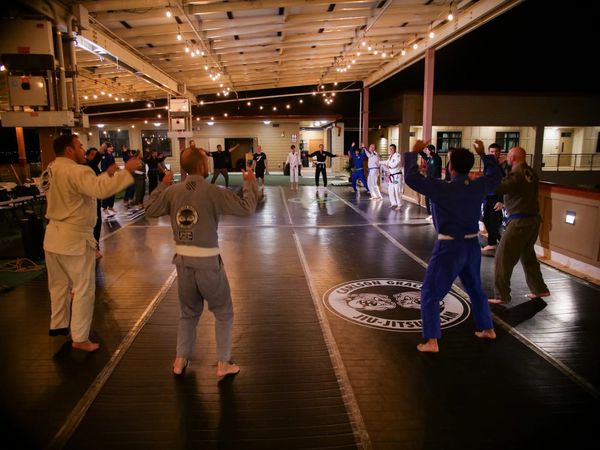
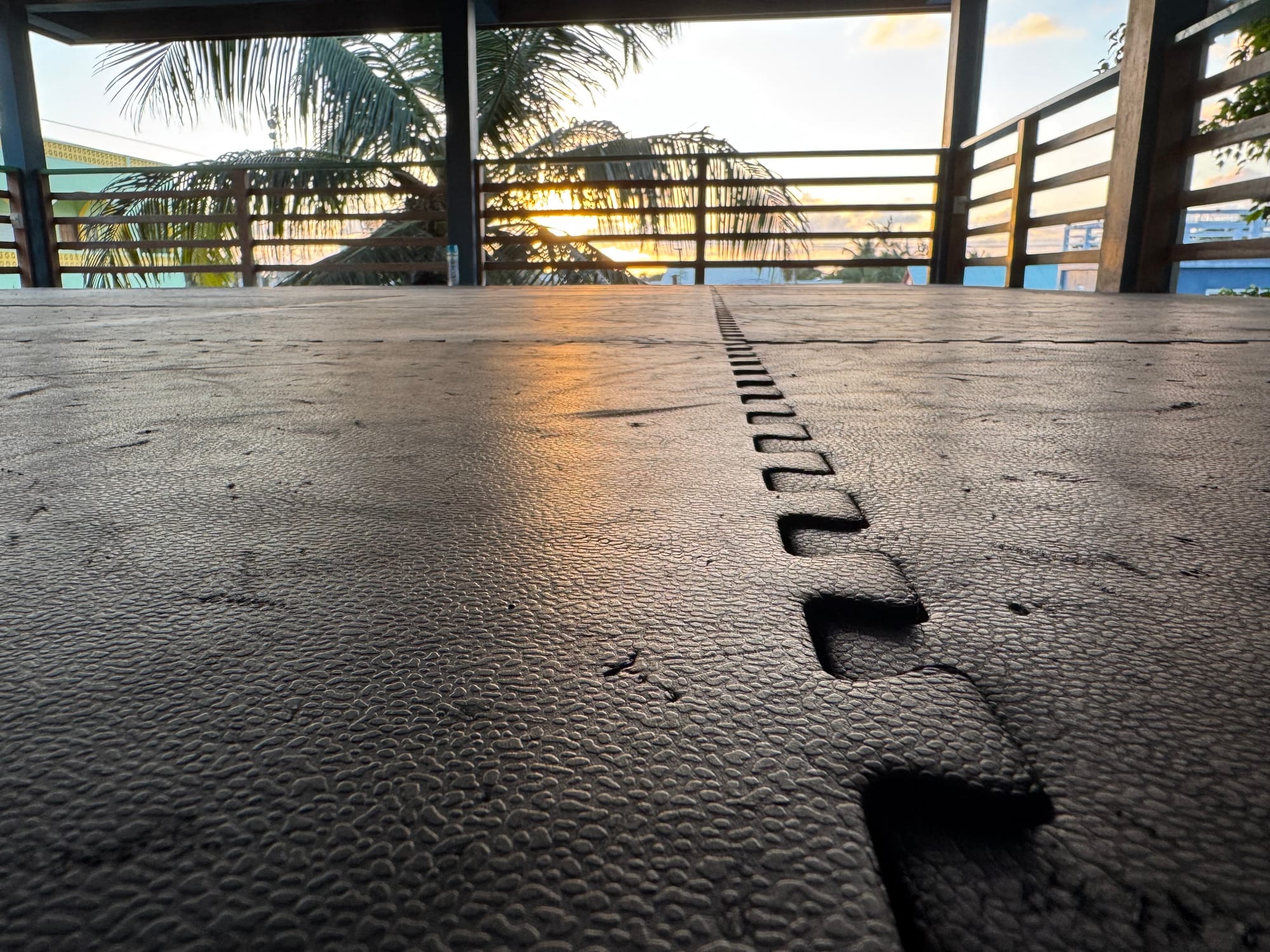
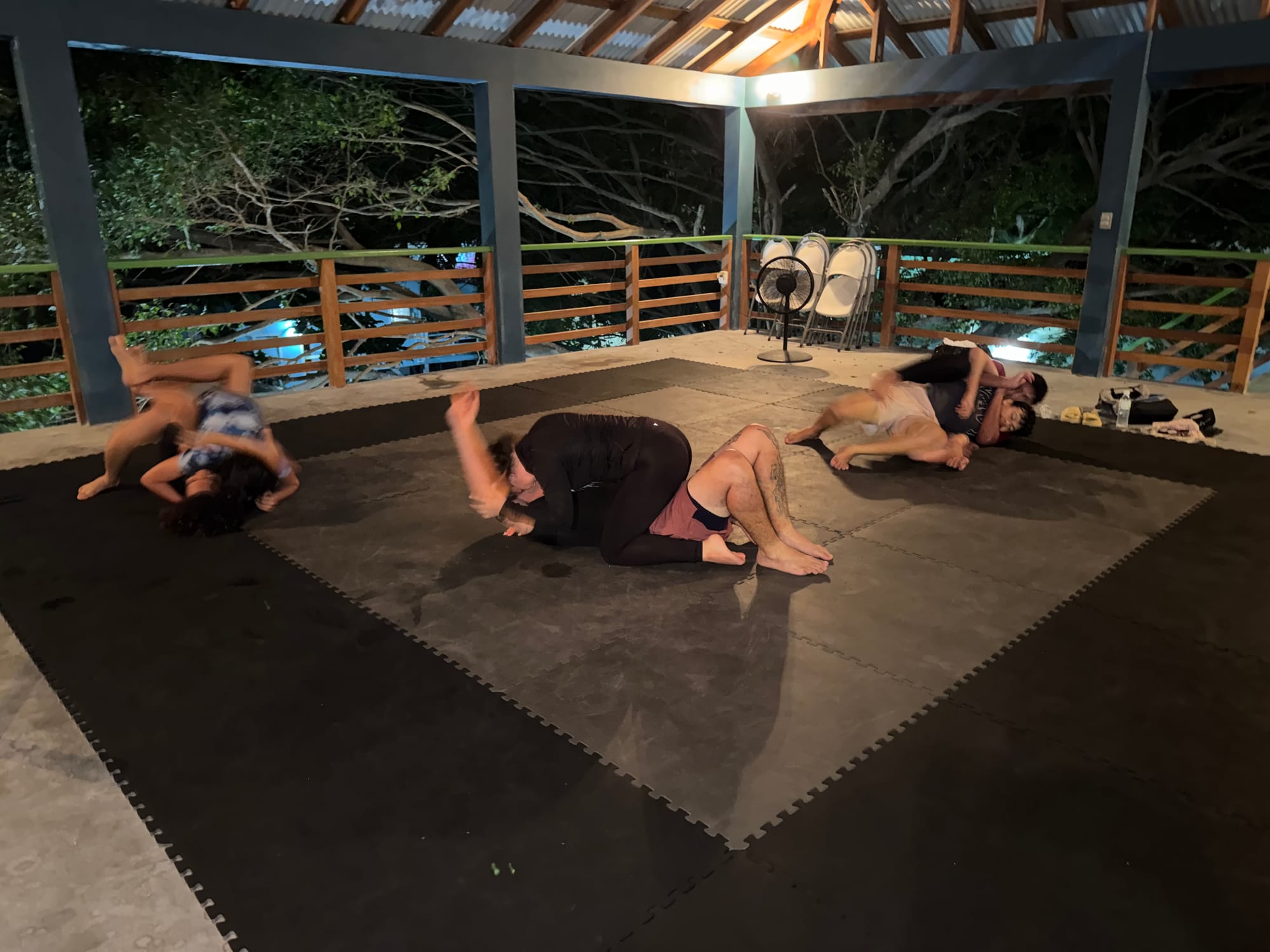
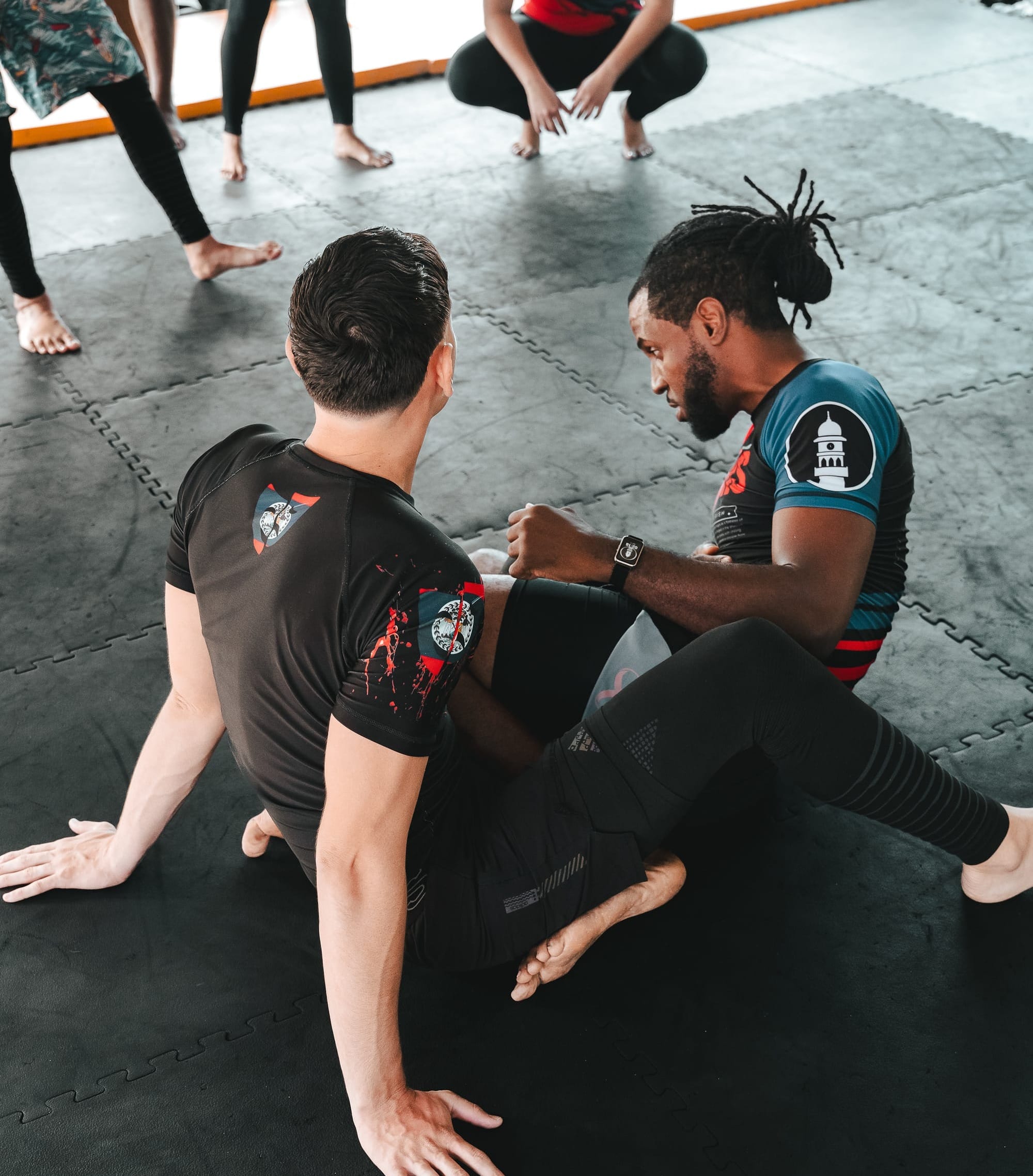
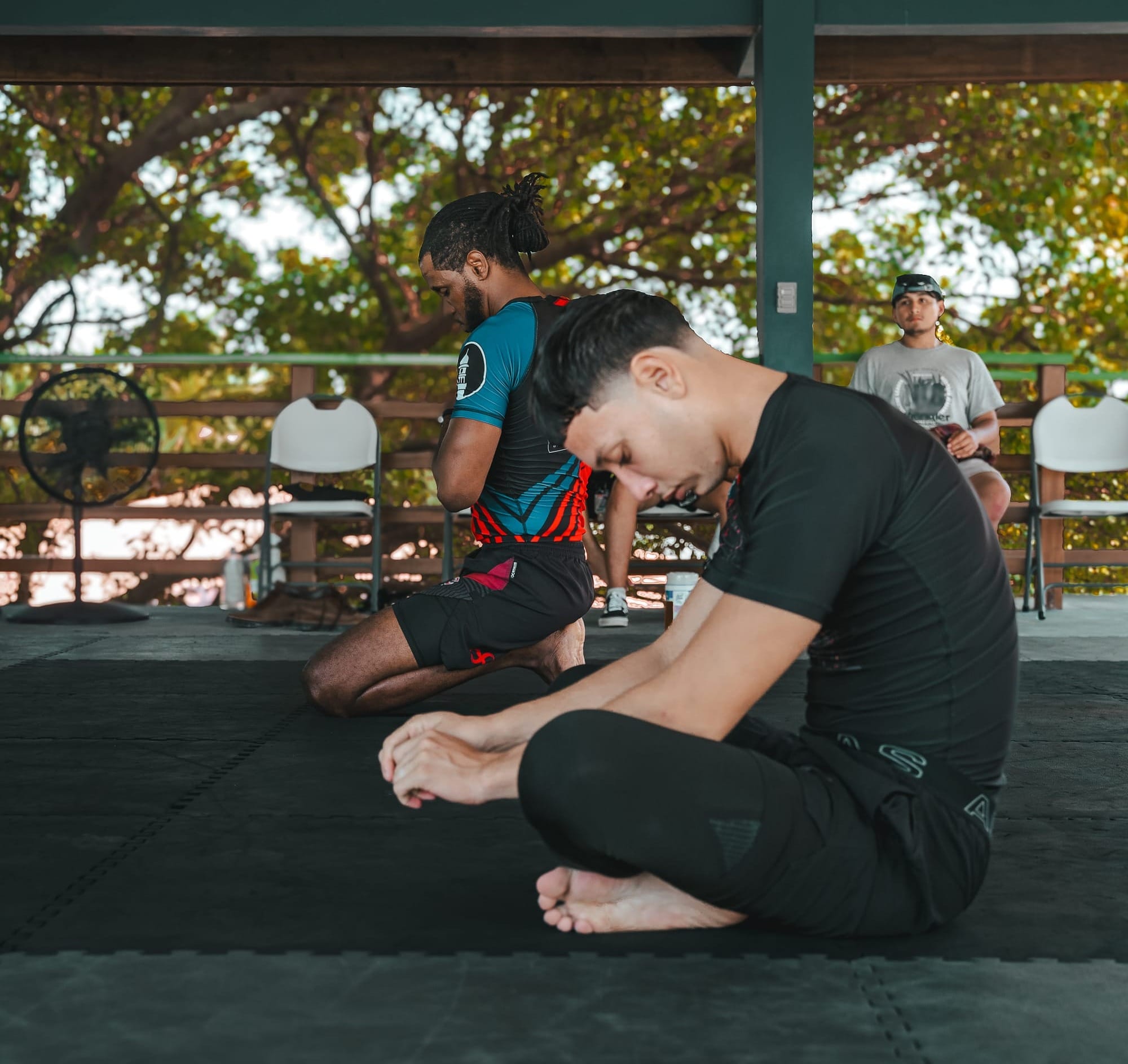
As the mats grew crowded, the conversation naturally shifted toward expanding the art to the rest of the island. It was time to expand. Once Joshua’s original mainland academy shipped over professional-grade mats, the operation moved from the bedroom to the Caye Caulker community center. There, the trio formally introduced the island to Dark Water Jiu-Jitsu with an official opening ceremony. Founded by Joshua, Ilya, and Mikhail, it stood as Caye Caulker’s first-ever Jiu-Jitsu gym. The name describes their preferred style on the mats: technical "submission hunters." Their game is built on smooth, consistent pressure, much like an octopus hunting its prey, slowly stifling the opponent and pulling them into an abyss where the pressure is absolute.
The response from the community was overwhelming. "People showed up," Rosado notes, "and most of them are still with us today!"
Following that successful launch, the gym eventually moved to the location where it resides now.
But just as the momentum felt unstoppable, shortly after Mikhail won gold in his first-ever competition on the mainland, the young gym hit a crisis: Joshua had to return to the mainland for personal reasons.
"I thought I would have to quit," Rosado says. "I was only a few months into my journey." But Joshua and Ilya saw something in the younger brother and convinced him to take the lead. The student, still processing his own white-belt victories, was suddenly the steward of the island's only Jiu-Jitsu culture.
Local Heart with a Transient Flow
The true soul of Dark Water is found in the transformation of those who step onto the mats. One regular attendee originally approached the coach with a common goal: self-defense. But that isn't why he stayed. He began to see Jiu-Jitsu as a puzzle that can only be solved in the absolute present.
"If we take the time to notice, we can watch him learn in real time," Mikhail observes. "It is a rare thing to watch someone who previously didn't even know the sport existed realize they have a natural affinity for it. His progress carries the whole room. He has used the art to gain a new confidence and a calm, an approach to all aspects of his life."
This local foundation is also met by a constant, transient tide. Dark Water has become a living census of the island’s visitors. On any given day, the mats might hold a black belt from the UK sharing an armbar variation, an Italian practitioner teaching Greco-style wrestling, or a father from the Midwest refining his guard passing. They arrive as strangers and leave as part of the island's grappling family.
The Ritual and the Future
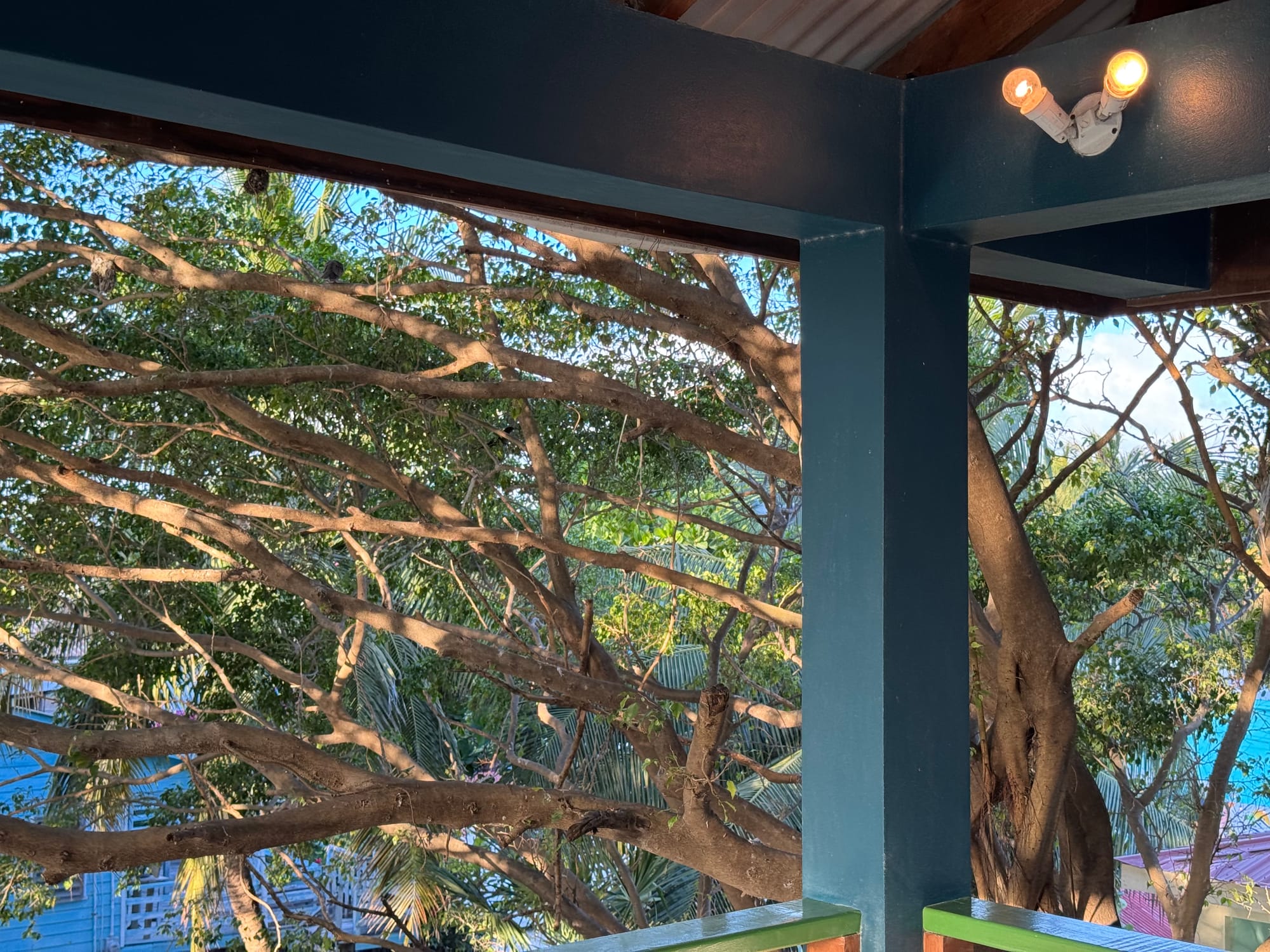
If someone closed their eyes during a session, they would encounter an experience no big-city gym could replicate. After a hard roll, the first sensation is the therapeutic cool of the sea breeze on the skin, a feeling they never take for granted. As you lie on the mats, the salt air feels almost healing, and your nasal cavity begins to tingle as you recognize the smell of snapper being prepared on a charcoal grill nearby. You can practically smell every seasoning being used.
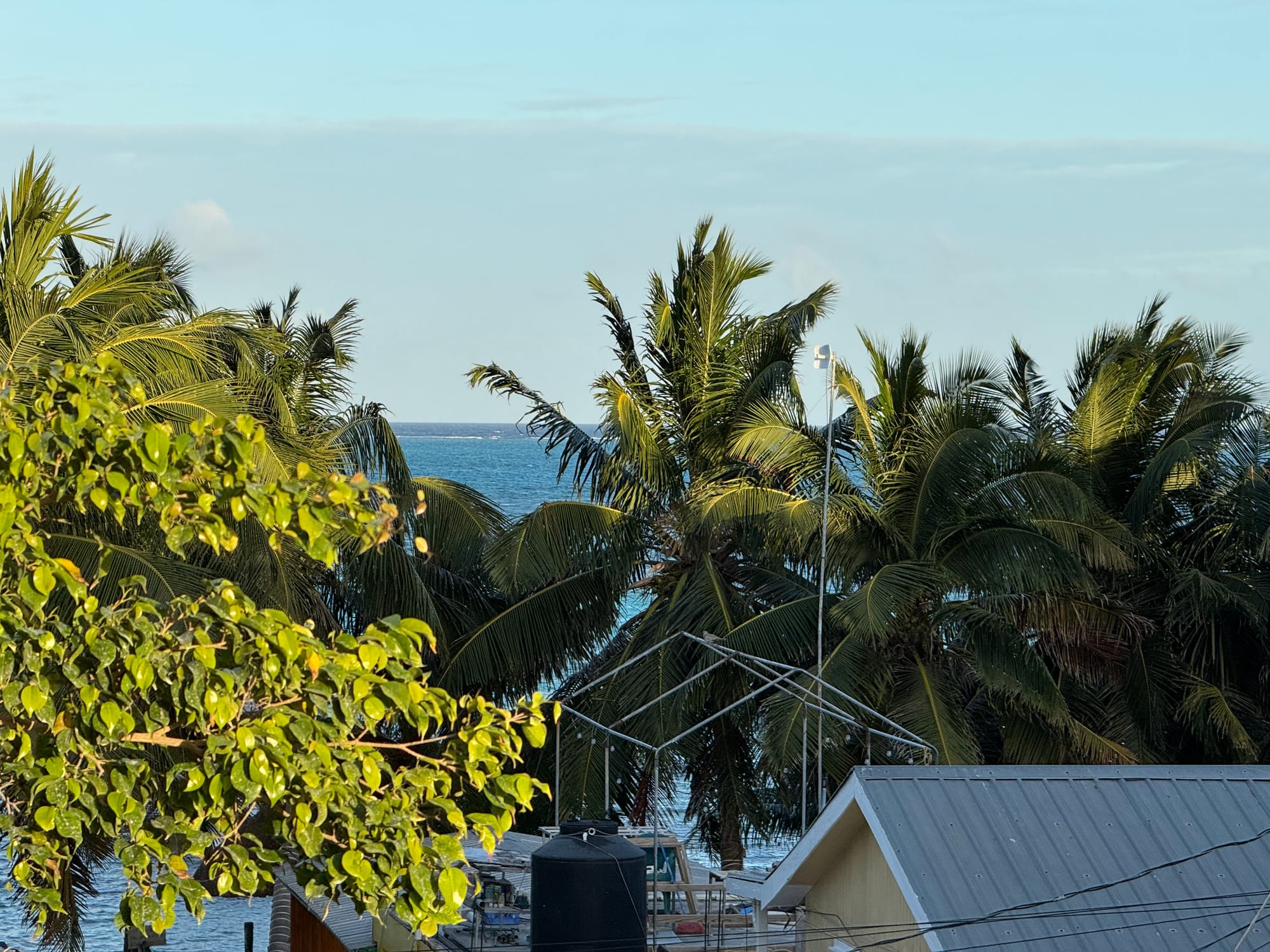
The sounds are just as distinct, the rhythmic swaying of trees in the wind and the chirping of birds who are your neighbors. When you finally open your eyes and stand up for the next roll, you don't see a concrete wall. You look past your training partner and see the world’s second-largest barrier reef stretching across the horizon. You take a moment in awe before locking eyes with your partner to begin again.
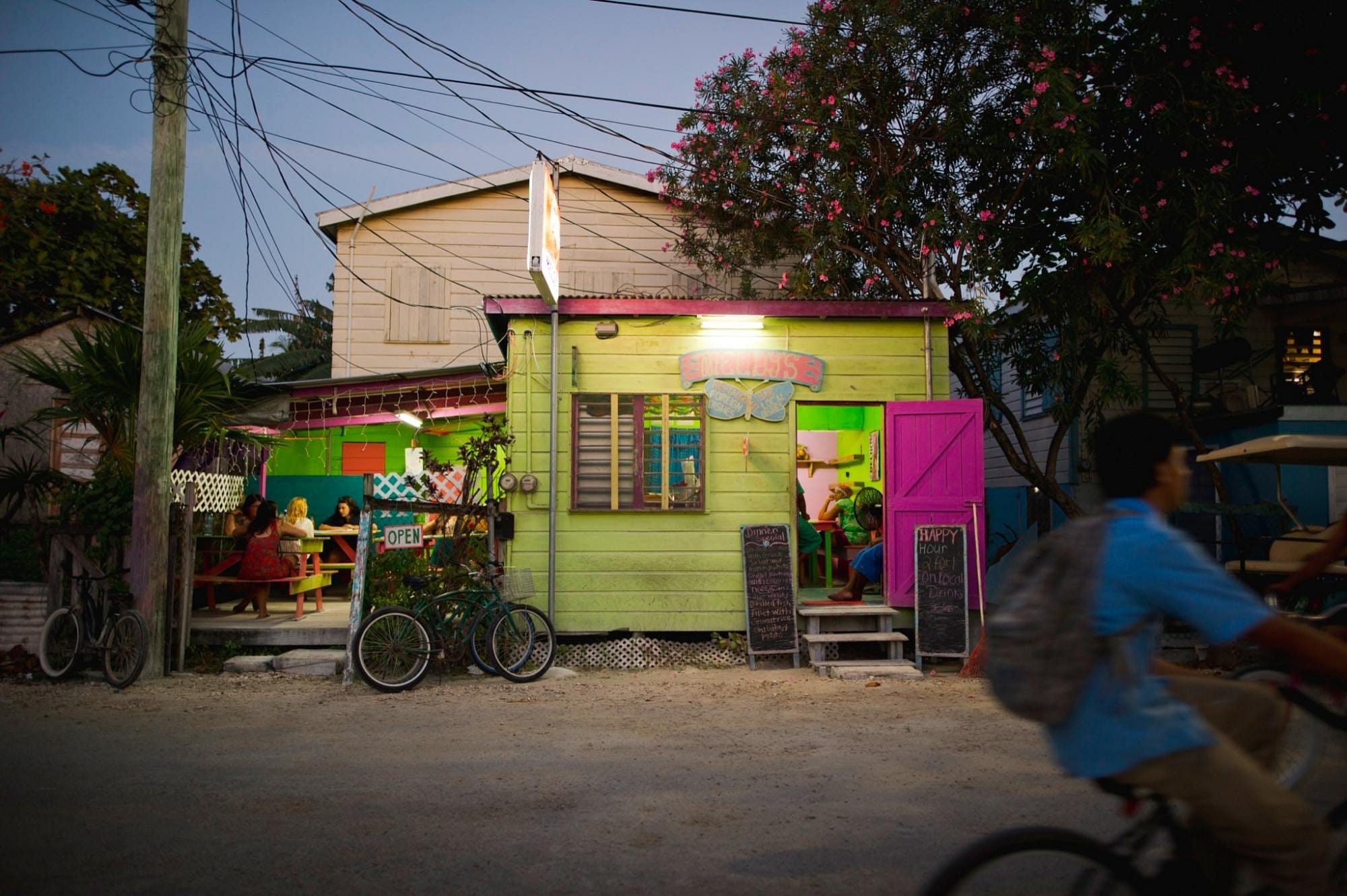
The session doesn't truly end when the clock stops. The mandatory post-training routine is a pilgrimage to Meldy’s, a locally owned food joint. Over tortillas, beans, and fresh protein, the conversation remains fixed on the mats. "We enjoy great food while discussing Jiu-Jitsu," Mikhail says. "It doesn’t get much better than that."
Mikhail isn't training fighters to leave the island; he’s training them to be more present within it. It is a reminder that even on a tiny island, there is always more room to grow, provided you are willing to start on the floor of a bedroom and wait for the tide to come in.
Written by